Close is two weeks out. Transactions still clear. Reports arrive, eventually. Finance needs a month-end view that does not depend on three analysts and a folder of spreadsheets. Growth wants campaign results the current system cannot produce without manual pulls from CRM, ad platforms, and marketing tools. Someone asks whether you should rebuild or improve what you have. The room debates tools and vendors while nobody leaves with a name on the database owner line.
That is where most database modernization programs stall. Not because the technology is mysterious, but because the engagement never names who owns the database once the partner leaves. Until that owner is named, rebuild versus improve-in-place stays a preference debate instead of a delivery decision. Data modernization services fail the same way when the contract buys tools and never names the operator.
The Decision Most Teams Are Actually Making
Until that owner is named, the room is not really choosing rebuild or improve-in-place. It is choosing whether month-end close stays a war room, or becomes a reporting system someone on your team can run alone.
Legacy databases often work fine for what they were built to do. The problem is what the roadmap now requires: reporting across systems, data ready for AI and machine learning, compliance controls, or a central reporting store the current setup was never designed to support.
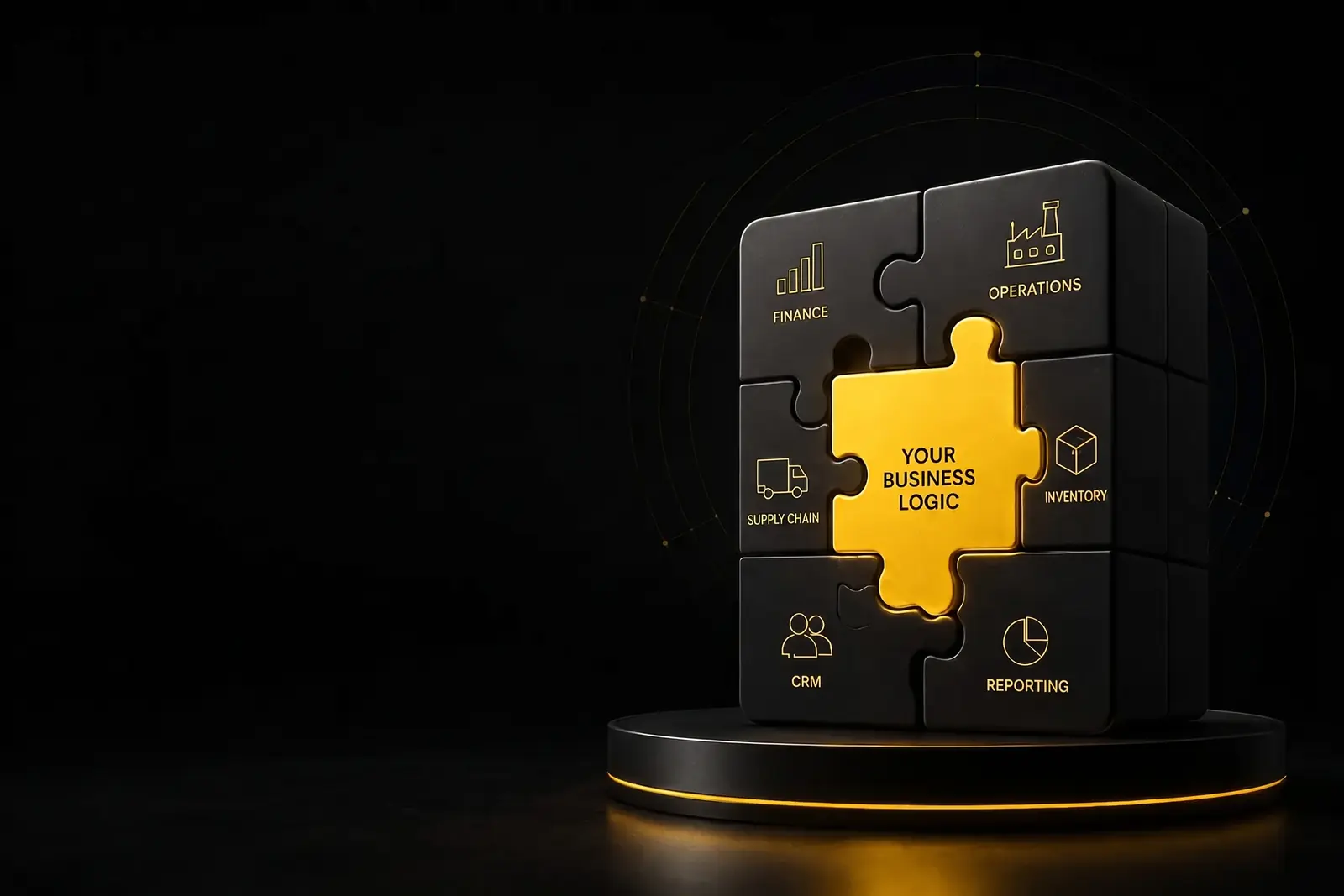
When CRM, marketing automation, ad platforms, finance, and operations each keep their own stores, data silos turn the question practical fast. Which systems need data integration? Which outcome ships first? Who accepts delivery, and who runs the result on day 30?
Month-end close is the clearest version of that question. Finance needs reconciled numbers by the date the board already expects them. Growth needs the same discipline for campaign reporting. Both fail at the reporting layer, not the transaction layer. A clear rebuild-or-improve call gives leadership four things worth funding:
- A contract tied to a data outcome, not a technology preference
- A timeline tied to a real business date (close, board review, renewal)
- Compliance built into delivery instead of added after launch
- Internal ownership of the database when the engagement ends
A COO can settle this without becoming a data specialist. Three ownership decisions before anyone funds the path answer the rest.
Three Ownership Decisions Before You Fund the Path
Who runs the database after go-live is not a stack question. Neither is which path unlocks the next close. Both reduce to three ownership decisions unosquare documents in Discovery. None require reading code. All three determine whether month-end close, campaign reporting, or any other outcome can transfer to your team at handoff.
1. Handoff Evidence, Not Stack Preferences
Shortlist partners on proof that databases transferred cleanly. Look for acceptance reports, documentation of how the data is organized and how it moves between systems, and operating guides your team will actually use. Decks start conversations. Completed handoffs predict whether your team can run the database after the first close cycle, and recover when something breaks, without calling the vendor back.
2. “Done” Means Your Team Runs the Database
Product, finance, and IT agree on one definition of “done” before the Statement of Work (the signed scope and acceptance document) is signed. That definition names three things: the internal owner, the reconciliations that must pass at handoff, and what day-to-day control looks like when the partner is out of the room.
For month-end close, “done” means finance can produce the close view alone. For campaign reporting, “done” means marketing can defend campaign numbers without a war room. Put reconciliation standards and a clear picture of how information is organized into that definition early. Mid-build debates then stay about outcomes, not scope arguments.
3. One Named Owner for Database Acceptance
One person accepts delivery on behalf of the team that will operate the database. Committees can advise; someone has to sign. Naming that owner before the contract is signed gives every milestone a decision maker tied to handoff, not slide approval. The same owner who signs off on month-end reconciliations at go-live is the person who keeps compliance evidence current after the partner leaves.
Those three decisions do not pick rebuild or improve-in-place for you. They name who will answer the call once the path is chosen, including the close cycle after the partner leaves.
Deciding Clearly: Rebuild or Improve In Place?
With a named owner and a definition of “done” for month-end close, the path choice starts from ownership, not architecture diagrams.
Rebuild when you need long-term control of the database and the current platform cannot get you there. Improve in place when the goal is step-by-step improvement{2} within what the existing database and data flows can reasonably support.
That distinction shapes how you buy the work. A rebuild toward modern databases and cloud data platforms{1} is a different engagement from a targeted improvement of existing reporting.
Naming the path up front keeps contracts, timelines, and handoff plans aligned with the outcome your owner will run. That path is the core of any serious data modernization strategy: rebuild the foundation, or improve what you already operate.
Three questions usually settle the choice:
- Who runs the database after launch, and can that team operate it day to day? That includes how data is organized, how it moves, and how to recover when something breaks.
- Does the roadmap require capabilities the current database cannot support without fundamental rework?
- Can improvements ship in phases, each with its own acceptance gate?
If the first two point toward new territory and the third is no, you are likely rebuilding. If all three leave room for step-by-step progress on the existing platform, improving in place is usually the stronger fit.
Rebuilds need executive sponsorship, a thorough handoff plan, and a partner who transfers the database, the operating guides, and the knowledge to run them. Improve-in-place work fits focused delivery with clear acceptance gates.
Once the path is chosen, lock the language of the work itself. Migration and modernization are not interchangeable. Using them that way is how a close project loses its owner mid-engagement.
Migration or Modernization? Differences Every Leader Should Know
Rebuild or improve-in-place answers how far the database has to change for finance to run close alone. Migration versus modernization answers what the contract is actually buying for that owner.
Partners often use those terms interchangeably. They are not the same, and the budget shows the difference. Blurring them is how a month-end reporting project turns into an open-ended hosting move with no named owner at the end.
| Term | Executive Intent |
|---|---|
| Migration | Move or copy databases and data work to a new host while keeping behavior the same. The focus is continuity, hosting efficiency, and lower infrastructure risk. Projects that move as-is to the cloud, or move with minimal changes, fall here. A cloud migration to AWS, Google Cloud, or another host is still migration if behavior stays the same. |
| Modernization | Change what the data systems can do for the business by redesigning for performance, compliance, scale, or new capabilities that change how data is used. |
Moving a database from on-premises servers to a cloud host is a migration. Modernization{1} that adds real-time analytics the original platform could not support changes how data is organized, how it moves, and what reporting products you get, not just where storage lives. The same bar applies when leaders ask for business intelligence views that refresh without a spreadsheet bridge.
Buy the work with intent stated plainly. “We are migrating to reduce hosting costs without changing database behavior” is one contract. “We are modernizing so finance can run month-end close on owned data without spreadsheet reconciliation” is another. Database modernization and broader data modernization services both fail when that intent stays vague.
Clear terms keep the rebuild-versus-improve debate tied to an outcome the named owner can verify at close. That verification comes from week-one evidence against your real data, not another slide review.
The Rebuild-or-Improve Answer Comes From Evidence, Not Debate
Once migration versus modernization is stated in plain language for month-end close, stop debating stacks in the abstract. Run that close scenario (or campaign rules) against real data. unosquare‘s Discovery phase puts a working prototype in front of your team in week one, using your actual data, so rebuild versus improve-in-place rests on evidence instead of preferences. See how the Discovery phase works before committing to a full build.
That evidence names the path and the database owner. Five checkpoints then keep delivery predictable from that first prototype through handoff.
GRASP: Five Checkpoints for Confident Delivery
Week-one evidence settles the path and the database owner. GRASP keeps that decision intact through handoff. Settle each letter before production code starts. unosquare builds each into fixed-fee delivery:
- G locks price to deliverables and a definition of “done”
- R transfers rights and operability your team can exercise
- A turns go-live into an acceptance decision with a named owner
- S surfaces risks and cost controls early
- P proves security and compliance with evidence someone can open
| Letter | Checkpoint | What gets settled |
|---|---|---|
| G | Guaranteed price and deliverables | Scope, price, and definition of “done” fixed in Solution Architecture before code; milestone payments tied to testable acceptance gates; change orders priced and approved before out-of-scope work; overrun stays with unosquare |
| R | Rights and operability | Full admin access to databases and related code at handoff; operating guides, monitoring and alerts, and scripts your team uses to put updates live; backup and recovery documentation your team can follow; your team can switch to a backup when something fails without the partner; named 2–4 week support window with knowledge-transfer milestones |
| A | Acceptance and go-live | Documented acceptance plan with pass/fail criteria, performance targets, staged go-live, explicit conditions for returning{3} to the prior database, and named responsibilities; formal acceptance reports before final sign-off |
| S | Surfaced risks and cost controls | Live risk register with owners, likelihood, impact, and mitigation; Discovery limits and third-party cost ceilings; Year 1 and ongoing total cost of ownership summary; source reliability and system-connection dependencies surfaced in week one |
| P | Proven security and compliance | Current security assessments and remediation evidence; compliance mappings{5} that tie controls to proof; data responsibility matrix{7} that names who decides how data is used and who processes it; data security controls proven before go-live; security-tested (penetration-tested), SOC 2-compliant systems as deliverables under GDPR, HIPAA, or CCPA |
Month-end close is the simplest way to see GRASP in practice. Each checkpoint maps to a date finance already works to: close start, reconciliation cutoff, board pack due. When that calendar still ends in spreadsheet days, the ownership problem shows up in the open.
Example: Month-End Reporting That Still Takes Days
Those close dates are not abstract checkpoints. Close starts. Analysts pull extracts from finance, CRM, and operations. Spreadsheets reconcile what the platform never aligned. Leadership waits days for numbers that should already be ready for decisions.
Transactions still clear. What fails is reporting: siloed sources, weak data integration across systems, manual reconciliation, and a layer that cannot keep pace with the board.
Scope it as a clear outcome. Name the reports that must be correct. Name the reconciliations that must clear without a war room. Name the go-live criteria finance will accept, and the database owner who will sign off at handoff. Rebuild or improve-in-place follows from there: do you need a new reporting foundation your team will operate, or a controlled improvement of what you already run?
unosquare agrees scope, price, and definition of done before build begins. Discovery runs your close scenario against a prototype in week one, so the path is visible before the full 8–12 week fixed-fee build.
At handoff, your team owns the database, how the data is organized, and the operating guides needed to run close without the partner in the room. A month-end outcome leadership trusts beats an open-ended, application-wide modernization program.
The same ownership logic applies when growth needs campaign reporting across CRM, ad platforms, and marketing tools. Different outcome, same test: can your team produce the view alone after handoff? That test only holds if GRASP runs against the close calendar (or the next board review), not against a generic go-live slide.
How unosquare‘s Delivery Model Puts GRASP Into Practice
The month-end example above is the acceptance pattern, not a side story. GRASP names what must be locked before code. unosquare‘s four-phase model runs those checkpoints against the close calendar (or the next board review for campaign reporting). Evidence shows up throughout the engagement, not in a last-minute documentation scramble.
Discovery: Week 1
Discovery runs your month-end close scenario against a working prototype, not a stack diagram. Finance, CRM, and operations extracts flow through the same process leadership expects at close.
Rebuild versus improve-in-place becomes visible evidence: which reconciliations still break, which sources still need manual alignment, and whether the current platform can reach a trusted month-end view without full rework.
That week also names who will own the database after go-live, including day-to-day operation and recovery. It documents gaps in the source data with named owners, and settles acceptance criteria finance can sign off on before the Statement of Work is signed. It also shows whether your data infrastructure can support the close view as-is, or needs a rebuild path.
Solution Architecture: Week 2
Week two converts Discovery evidence into a locked path, fixed price, and go-live plan tied to the next close cycle. Rebuild or improve-in-place is documented as a business decision with tradeoffs your named decision-maker can approve without reading code: what changes in the reporting foundation, what stays on the existing database, and who operates each piece after launch.
Scope, budget, and definition of done are fixed before build begins, including the reconciliations that must clear and the reports that must be correct at handoff. If the path includes a cloud migration, Architecture names the host (AWS, Google Cloud, or another) and what stays unchanged versus what modernization unlocks.
Build: Weeks 3–11
Each increment moves month-end closer to a number finance can trust without a war room. Reconciliation milestones replace abstract progress updates: fewer manual spreadsheet bridges, named sources feeding the same month-end view, and acceptance gates tied to reports leadership already expects on the close calendar.
Finance validates numbers in a test setup before go-live. Progress records give the COO evidence that delivery is on track without daily engineering meetings.
Deploy and Handoff: Week 12
Handoff is measured against the close calendar, not a generic go-live date. Go-live rehearsals run with finance, operations, and the named database owner in the room. Operating guides cover how the data is organized, how to recover when a data flow breaks, and the monitoring your team will run alone.
The acceptance checklist confirms your team can produce the month-end view, own the database day to day, and call the partner only during the planned support window, not every close after that.
unosquare brings 16 years of engineering discipline and has completed 2,500+ projects across regulated industries{8}. Client NPS ranks in the top 1% of B2B services.
Builds start as low as $100K, scoped before code is written. The delivery model works when the first funded outcome is the one a named owner can run at handoff, not the widest landscape redesign on the roadmap.
Which Data Outcome to Fund First
Handoff only sticks when the first funded outcome has a named owner. Not every initiative deserves the same priority. Fund the outcome where that owner unlocks the next capability fastest: a trusted month-end view, a campaign reporting view growth leadership can defend in a board review, a production-ready data layer for an AI feature, or a compliance control the current platform cannot support.
unosquare‘s fixed-fee model applies where that outcome fits an 8–12 week engagement with a named owner and clear acceptance at handoff. Discovery confirms fit in week one before you commit.
| Data outcome | What ownership unlocks | Fit for 8–12 Week Fixed Fee | Why leaders fund it first |
|---|---|---|---|
| Month-end reporting | Finance runs close on owned data without spreadsheet reconciliation | Yes, when reports, reconciliations, and go-live criteria are named up front | Turns a recurring close pain into a database your team operates every month-end |
| Campaign reporting for growth | Marketing owns a trusted view across CRM, ad platforms, and marketing tools without manual spreadsheet reconciliation | Yes, when reporting rules, source connections, and acceptance criteria are named up front | Gives growth leadership numbers the board can trust without waiting on a war room every quarter |
| AI or analytics layer moving to production | Product and data teams own the live database connections, monitoring, and recovery the pilot never needed | Yes, when representative data is available from day one and the scope is bounded | Moves a proven concept onto a platform your team can extend without the partner |
| Central reporting store or SaaS database migration | IT owns hosting and day-to-day database control on the new host with documented go-live | When go-live is bounded and acceptance names who operates the database afterward | Lowers cost and puts day-to-day database control back in-house |
Central reporting and analytics modernization projects{4} (such as moving from an older reporting database to a modern cloud platform, a data lake for shared extracts, or a data warehousing layer for board packs) often sit with the AI or analytics row above: meaningful cost and performance impact, scoped to one business need, and driven by readiness the current platform cannot support. Modern databases matter here when the current store cannot deliver real-time analytics without manual pulls.
Board and PE-backed digital transformation mandates frequently surface database modernization as a prerequisite. The capability on the roadmap needs a platform someone will own after launch. That ownership line is data management in practice: who runs the store, who keeps it current, and who answers when close breaks.
Compliance-critical database work belongs at the top of the list regardless of ROI. A regulatory deadline is a clear sequencing signal: name the owner, name the path, set a timeline tied to handoff.
When an 8–12 Week Data Path Fits
Once the first outcome and owner are named, the timeline question gets concrete. The 8–12 week window is real for clear outcomes where the path and owner are locked before build.
Week one runs your close scenario (or campaign rules) against a prototype. Week two locks path, price, and go-live plan. Build runs weeks 3–11. Handoff lands in week 12 with your team owning the database day to day: how data moves, and how to recover when something breaks.
| Data path | Suitable for 8–12 Week Fixed Fee? |
|---|---|
| Clear outcome with a named database owner (month-end close, campaign reporting, AI data layer, compliance control) | Yes |
| Full-landscape redesign in one engagement | No. Phase it; start with one outcome your team will own afterward. |
| Targeted improvement of reporting or data flows on the existing platform | Yes, when acceptance gates name who operates each piece at handoff |
Two more conditions make that window workable: representative data from day one, and one internal decision-maker who can accept for the team that will run the database. Discovery confirms both against your data, not a generic timeline slide.
Delayed data access, unscoped regulatory approvals, unavailable owners, and cleanup needs show up early, while the path can still be shaped. If source data needs significant cleanup before migration, scope that work as its own phase with its own owner.
Timeline clarity also forces the question that outlasts the build. The same named owner who signed month-end reconciliations at go-live still has to keep compliance evidence current once your team owns the database day to day.
Compliance After Handoff: The Database Owner Keeps It Current
That post-handoff question is not a separate compliance workstream bolted onto the close project. It is the same ownership line that made rebuild versus improve-in-place a delivery decision.
Compliance deliverables do not retire when the partner leaves. They need update schedules and a clear process for keeping proof current. That is where data governance shifts{5} from project deliverable to day-to-day discipline.
The same person who accepted month-end reconciliations at go-live is often the right liaison for that proof afterward. Assign those roles at handoff, not after the first audit question.
| Deliverable | Purpose | Who owns it after handoff |
|---|---|---|
| Security assessments and security test (penetration test) reports | Proof of current database security posture | Named owner on the database operations team |
| Compliance mapping table | Shows implemented controls and supporting evidence for how data is organized and how it moves | Legal or compliance, with a database liaison |
| Data responsibility matrix | Clarifies who decides how data is used and who processes it for each store and stage | Data governance, tied to the named database owner |
Modern data systems can simplify governance by centralizing controls, but the workflow still has to be designed for the team that will operate the database alone. If that ownership line is still blank, the fit checklist below will show it.
Is This Right for You?
If compliance after handoff still has no named liaison, or month-end close still has no named database owner, rebuild versus improve-in-place is still an ownership question. A fixed-fee database modernization engagement may be the right next step when several of these are true:
- Month-end close still depends on spreadsheet reconciliation across finance, CRM, and operations databases
- Campaign reporting still depends on manual pulls from CRM, ad platforms, and marketing tools that never reconcile to one growth view
- A board-level or PE mandate to ship a data capability by a specific quarter, with no named database owner after launch
- An AI pilot that proved the concept but cannot reach production because nobody owns the live database layer
- A compliance deadline requiring certified database controls before regulatory review, with handoff to an internal owner
- A SaaS database or reporting-store renewal that no longer justifies its cost, and leadership wants day-to-day database control back in-house
- Limited internal capacity to run a multi-year program, but a clear outcome (like month-end reporting) would unlock the next capability
- Aging database systems that still process daily work but cannot support the next roadmap capability without naming who owns them afterward
If three or more apply, start with the prototype against your data. unosquare names the path and owner before build begins. After handoff, the first close your team runs alone is the measure that matters.
Measuring Success After Handoff
Fit is not the finish line. Value shows up after the platform is in production.
For month-end close, the first test is the close cycle after handoff: can finance produce the view without the partner in the room? For campaign reporting, the test is whether marketing can defend campaign numbers at the next board review.
Operational measures: first 90 days
Track a short list your COO can read without a translation:
- Uptime against target
- Time to recover when something breaks
- Incident rate versus the previous baseline
- Whether service commitments are met
- Whether data connections between systems stay reliable
The recovery test matters most for the ownership line: can your team bring the database back without calling the partner?
Business measures: ongoing
Measure the outcomes leadership already funds:
- How much faster answers reach the people who need them
- Adoption of capabilities database modernization unlocked
- Time from go-live to the first demonstrable business improvement
- Time from when data enters the system to when leadership can use it for analytics, dashboards, and campaign reporting
For central reporting and advanced analytics projects, the key metric is often speed to insight{4}: does the reporting layer now deliver answers in minutes instead of hours?
Separate Year 1 setup and migration costs from the ongoing run rate in your total cost of ownership estimate. Cloud computing, support, and licensing over three years give leadership a fuller picture. Include data quality gains in the ROI calculation: clean, reliable data lowers the cost of every decision made from it.
One Week to a Working Prototype. Then You Decide.
If rebuild versus improve-in-place still has no named owner, start with evidence, not another debate. unosquare turns that decision into a scoped, fixed-fee outcome: prototype first against your close scenario, agreed scope and price before build, and a handoff where your team owns the database. Request a free prototype against your data so you can see the path and go-live risk before you commit to the full build.
Frequently Asked Questions
When is a rebuild the right choice instead of improving in place?
Choose a rebuild when your roadmap needs capabilities the current database cannot support, when compliance requirements cannot be met by patching existing structures and controls, or when you need to own the database day to day in a way the current setup will not allow. Legacy databases that still process daily transactions often fall here because their original design was not built for real-time analytics, larger volumes, or the reporting and AI workloads now on the roadmap.
Common stores such as SQL Server or PostgreSQL can still be the right foundation after a rebuild or an improve-in-place path; the owner line matters more than the brand name on the license.
Start with a discovery prototype to validate rebuild scope before you commit. The week-one prototype surfaces data quality issues, system-connection dependencies, and acceptance criteria that show whether a rebuild is the right path, and how to scope it for fixed-fee delivery.
Is 8–12 weeks realistic for a project of our complexity?
It depends on scope, not just complexity. The 8–12 week window works when the deliverable is well-defined, representative data is available from day one, and one internal decision-maker can approve acceptance criteria without a committee process. It does not apply to full platform redesigns or multi-system integrations.
The Discovery phase answers this with evidence. If the scope cannot be confirmed for fixed-fee delivery after Discovery, no commitment is required. You leave with either a working prototype that supports a fixed-fee build or a scoped plan for a longer program.
What do we own at the end of the engagement: code, data, hosting setup?
Everything that makes the platform runnable. Full code ownership, full data ownership, and documented hosting and setup transfer to the client at handoff.
The client team receives full admin access to databases and related code, plus operating guides, monitoring and alerts, and scripts to put updates live for the data systems, so there is no vendor dependency after the support window closes.
How do we modernize older databases without starting a multi-year program?
Start with a defined, clear data outcome that can ship in 8–12 weeks. Database modernization does not require replacing the entire landscape at once.
A phased replacement of one reporting layer at a time{2}, a data migration from on-premises databases to a cloud data platform, or a rebuild of a specific data layer for an AI feature can all fit a fixed-fee database and data modernization path. That is also how data infrastructure upgrades stay owned: one outcome, one owner, one handoff.
Discovery validates whether your specific situation fits that window. If it does not, the output is a scoped plan for the longer program, with a clear next step rather than an open-ended commitment.
How do we move from an AI pilot to a production data platform?
Pilot and production diverge on readiness and ownership. Pilots run on clean, controlled data. Production needs live connections, monitoring, recovery procedures if systems fail{6}, and a named team that can own the database day to day without the partner.
An 8–12 week fixed-fee build can move a proven pilot onto a production platform when the concept already holds. Discovery maps live data needs and system-connection dependencies.
Production delivery includes the full operating package: not just the AI capability, but the database layer your team will run afterward.
References
- Google Cloud. (n.d.). Migrate to Google Cloud: Get started. Google Cloud Documentation.
https://docs.cloud.google.com/architecture/migration-to-gcp-getting-started - Microsoft. (2025). Cloud modernization guidance. Microsoft Learn.
https://learn.microsoft.com/en-us/azure/cloud-adoption-framework/modernize/ - Microsoft. (2025). Plan your migration. Microsoft Learn.
https://learn.microsoft.com/en-us/azure/cloud-adoption-framework/migrate/plan-migration - Google Cloud. (n.d.). Introduction to BigQuery migration. Google Cloud Documentation.
https://docs.cloud.google.com/bigquery/docs/migration/migration-overview - Pascoe, C., Quinn, S., & Scarfone, K. (2024). The NIST Cybersecurity Framework (CSF) 2.0. NIST.
https://www.nist.gov/publications/nist-cybersecurity-framework-csf-20 - National Institute of Standards and Technology. (2010). Contingency Planning Guide for Federal Information Systems. NIST.
https://nvlpubs.nist.gov/nistpubs/legacy/sp/nistspecialpublication800-34r1.pdf - European Commission. (n.d.). What is a data controller or a data processor? European Commission.
https://commission.europa.eu/law/law-topic/data-protection/rules-business-and-organisations/obligations/controllerprocessor/what-data-controller-or-data-processor_en - unosquare. (n.d.). Software Products (SaaS). unosquare.
https://www.unosquare.com/industries/software-products-saas/ - unosquare. (n.d.). Case studies. unosquare.
https://www.unosquare.com/case-study/

Oscar Rank
Head of Marketing
Oscar Rank is the Head of Marketing at unosquare. He arrived there after a 15-plus year career spanning financial services, retail and technology. His path ran through product management, strategy, data and CRM roles before he made the jump into full-funnel marketing and GTM. He holds a degree in industrial engineering from the University of Toronto, with a specialization in human factors. That systems-first, human-centered mindset shows up in how he runs marketing: build the process, then let the data settle the argument. He writes about how software and AI are changing what’s possible for a business, and how that shifts the trade-offs leaders have to make.