
Step 01
Share your brief
The roadmap, the stack, the seniority and the expertise that matter most.

Ways to work with us
What we build
Technologies
Dedicated nearshore development teams, shaped around your roadmap and led by team leads you approve. Hire a long-term team that owns a product area, or a pod of six to ten for a release window. We manage delivery and performance, so your team stays on its own work.

4.9 / 5.0
Clutch · Top Nearshore 2025

Trusted by











The basics
A dedicated development team is a group of engineers who work only on your product. unosquare builds them as nearshore teams, shaped around your roadmap and technology and led by team leads you interview and approve. The team joins your standups and works in your tools, and we manage its delivery and performance.
A team that owns a product area for the long term. The leads change who is on it as the roadmap moves.
Six to ten engineers with a technical lead, for a release window. We stand the pod down when the window closes.
The real problem
Contractors finish the task and move on, with no stake in how your product does next year. A dedicated software development team stays. Its engineers build knowledge of your codebase and your decisions, and that knowledge compounds.
Your engineers stay for the long term, so you never re-onboard a new face every quarter.
They own the system as well as the task, and they debug production issues because the outcome is theirs too.
The longer they stay, the faster they move. Context cuts mistakes and improves decisions.
They know the codebase, the tech debt and why each decision was made.
It fits companies that need sustained engineering capacity to grow a product, build new features and maintain production systems.
How it works
No candidate parades. No endless interview rounds on your side. You brief us, and we shape the team.
Step 01
The roadmap, the stack, the seniority and the expertise that matter most.
Step 02
We propose team leads matched to your roadmap and technology. Your team interviews them and decides whether they fit.
Step 03
Each lead interviews and accepts the engineers who join.
Step 04
The pod ramps into your codebase, processes and tools, 2 to 4 weeks from your brief.
We stand behind the team. You focus on your product.
Step 01
Share your brief
The roadmap, the stack, the seniority and the expertise that matter most.
Step 02
We shape the team, and you validate the leads
We propose team leads matched to your roadmap and technology. Your team interviews them and decides whether they fit.
Step 03
The leads build the team
Each lead interviews and accepts the engineers who join.
Step 04
Launch
The pod ramps into your codebase, processes and tools, 2 to 4 weeks from your brief.
We stand behind the team. You focus on your product.
Team calculator
Start from a typical team or build your own. Each engineer carries a fully loaded monthly rate, priced the same way as staff augmentation.
How long do you need them?
Start from a typical team
Pick one or more teams. Lock a role to keep it when you remove its team.
Your team
–
Your quote is already on its way to us.
Pick a time that works for you.
No long-term contract. Scale your team up or down with notice.
Compare People models
All three People models draw on the same vetted engineers. They differ in who assesses each engineer, who manages delivery and how much of your team’s time they take.
| Criterion | Staff Augmentation | Dedicated Teams | Managed Services |
|---|---|---|---|
| Roadmap | Yours, directed by your leads | Your product roadmap | The SLAs we agree and our performance against them |
| Who shapes the lineup | You pick each engineer for a specific gap | We shape the team to your roadmap and technology | We staff pods to your coverage window and SLA scope |
| Who assesses each engineer | Your team interviews and approves every engineer | Your team interviews and validates the team leads. The leads interview and accept each engineer | As with dedicated teams: our team leads interview and accept each engineer |
| Who accepts replacements | Your team | The team leads | The team leads |
| Who manages delivery and performance | Your team | We do | We do, against SLAs with service credits |
| Who manages the engineer | We do | We do | We do |
| Draw on your team | Highest: you interview, onboard and direct each engineer | Lower: you validate the leads and set the roadmap | Low: you agree the SLAs and review a monthly dashboard |
| Start | Fastest: 2 to 4 weeks to place an engineer | Slower: the team leads come first, and they take the most care to choose | Staffed within 2 to 4 weeks, SLA governance live by week 15 |
| Acceleration | Steady: every added engineer still waits on your interviews and your leads’ time | Rapid once the leads are in: each pod stands up in 2 to 4 weeks, and the leads interview and accept the engineers | Overstaffed at launch, right-sized by week 17, then a known monthly fee at steady state |
| Best when | You need a specific skill in quickly and have leads with the time to direct each engineer | You need to scale a team quickly without adding load on your team | You want production systems run to agreed SLAs |
Rather pick and direct each engineer yourself? See IT staff augmentation
Team management
Most nearshore software development providers make you review dozens of profiles, schedule technical screens and make every hiring call yourself. With a dedicated team from unosquare, you interview the team leads, and the leads make those calls.
01 · We shape it
Share your roadmap and requirements, and we shape the team with the right seniority, expertise and technology fit.
02 · We own it
We vouch for every team we put forward, and we fix what isn’t working before you have to raise it.
03 · We optimize it
As your product evolves, so does the team. The leads adjust who is on it based on performance, fit and shifting roadmap priorities.
Replacements go through the team leads, so your team never restarts interviews.
The result is a nearshore software development team that gets better over time, not one that needs constant management from your side.
Stacks we staff
Every engineer is assessed in your stack before a lead accepts them.
 AI and machine learning engineers
Industries
We place engineers in sectors where compliance and security come first, and they arrive knowing the rules.
Engineers with PCI-DSS experience on high-frequency transaction systems.
Engineers trained on HIPAA requirements and PHI protection.
Engineers who work in GxP-validated environments and on FDA-regulated software.
Why Unosquare
Our teams across Latin America work in your time zone, speak your language and understand how US teams work.
Work with teams who share your working hours. No late-night calls or delayed responses.
Engineers contributing in 2 to 4 weeks, not months. We match each one to your stack and your needs.
Our engineers clear four vetting gates and are trained in the practices Fortune 500 companies use.
Start small and grow without re-onboarding. Every service is modular, so the model changes as your needs do.
Our engineers work the way US teams do, so communication and collaboration stay easy.
Dedicated account management, plus 24/7 operations when you need them.
Nearshore gives you the cost benefits of offshore and the easy collaboration of onshore.
4.9
Average Review Rating

Client results
Dedicated teams we run today in healthcare, publishing and banking.

32+ engineers, a QA lead and 3 Scrum Masters embedded across its products. The team launched a replacement platform on time with zero critical bugs, and the QA methodology it introduced now runs across athenahealth’s teams.
Read case study
40% of the engineering organization. unosquare engineers provide ongoing product development, modernization and cloud support across its divisions.
Read case study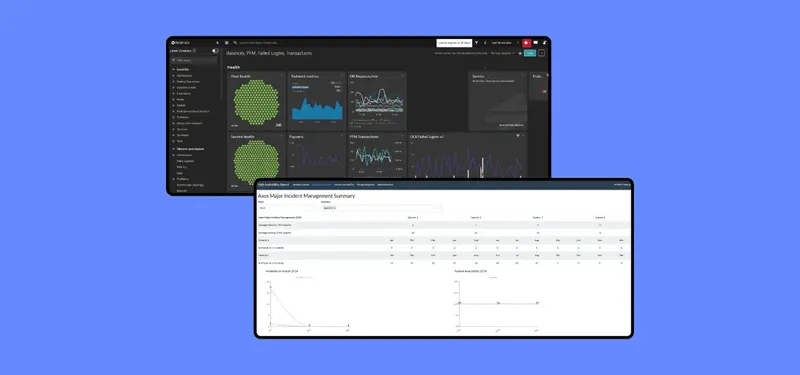 Financial
 Full-Scale IT Ops and Security Support for Banking GrowthAxos Bank · November 13, 2025Read case study
 MediaProduct Development & Cloud Migration Across Diverse TeamsHarvard Business Publishing · November 6, 2025Read case study
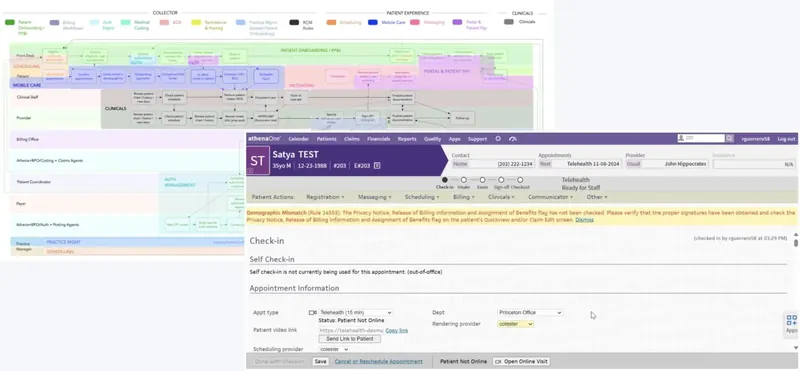 HealthcareModernizing Healthcare, One System at a TimeAthena Health · October 28, 2025Read case study
Let’s talk
Brief us on the roadmap and the stack in a 30-minute call. We come back with team leads for you to interview.
People and Projects
People · Trusted nearshore and onshore engineers who work your hours.
Projects · You bring a defined problem and a budget. We fix the scope and the fee, then deliver.
Before you start
Hiring dedicated software developers means engineers who work only on your product, inside a team we shape to your roadmap. You interview and approve the team leads, the leads choose the developers, and we manage delivery and performance. If you would rather pick individual engineers and direct them yourself, that is our IT staff augmentation model.
A fully loaded monthly rate per engineer on the team, the same model as our staff augmentation. We charge no recruiting fee, no placement fee and nothing for the vetting. Price a team with the calculator, or tell us the team you need on a 30-minute call and we come back with a written rate.
A team starts slower than staff augmentation, because the team leads come first and they take the most care to choose. Once the leads are in place, each pod stands up in 2 to 4 weeks and the team accelerates quickly, because the leads interview and accept the engineers instead of your team.
The team leads do. They run the work inside your standups and tools, against your roadmap, and we manage delivery and performance. You set the priorities and validate the leads. You don’t manage each engineer.
Yes, and the team leads handle it. They interview and accept the replacement, and we keep adjusting the team on fit, performance and your roadmap. You don’t re-source or re-interview anyone.
We are SOC 2 and HIPAA compliant and work inside PCI-DSS scope for financial-services clients. We build compliance in from day one rather than bolt it on. Engineers work on your systems under your access controls and your policies. All IP they create is yours, assigned in the contract from the start.
With a dedicated team, your team validates the team leads, the leads build the team and we manage delivery and performance. It starts slower, because the leads come first, then accelerates faster and takes less of your team’s time. With staff augmentation, you pick each engineer, your team interviews and approves every one, and your leads manage delivery while we manage the engineer. With managed IT services, we run your production systems to SLAs you agree. Plenty of clients start on staff augmentation and move to a dedicated team once the work settles.
Most sit in our own nearshore engineering hubs in Mexico, Colombia, Argentina, Bolivia and Paraguay, covering US Eastern through Pacific. We also have a nearshore hub in the UK and onshore teams in the US. Every engineer is a unosquare employee working from a unosquare delivery center, not a freelancer found on a marketplace.
In four steps. You share your brief: the roadmap, the stack, the seniority and the expertise that matter most. We propose team leads matched to it, and your team interviews and validates them. The leads interview and accept the engineers who join. Then the pod ramps into your codebase, processes and tools within 2 to 4 weeks.
Yes. A pod of six to ten engineers with a technical lead covers a release window, and we stand the pod down when the window closes.
We adjust the team. Add engineers for a new initiative or scale down after a launch, and the leads rebalance who is on it. You get the flexibility of external capacity without internal hiring or layoffs.
Yes. Some clients start with a dedicated team to build a product, then move a defined piece to a fixed-fee Outcomes project. Others start with an Outcomes MVP and move to a dedicated team for ongoing development. Every service is modular, so the models work together.
