For many operations leaders, Monday morning starts with the same familiar problem: a full overnight queue. Claims have come in with missing fields, mismatched documents, and edge cases the overnight scripts couldn’t resolve. The system did the easy part. Now people have to finish the rest before the day can really begin.
There’s no great technology mystery behind that pile. The workflow simply requires judgment across several steps, systems, and exceptions. Rule-based automation and traditional business process automation work well when the path is predictable. Agentic process automation (APA) is a form of intelligent automation designed for everything around that path: the work that still requires someone to open three screens, compare documents, make a decision, and move the record forward.
APA becomes worth the investment when a specific workflow reaches production, belongs to your organization, and can be run by your team after handoff. That’s the real business case: not an impressive demo or a pilot that never leaves staging, but a working capability that operations can rely on.
What Agentic Process Automation Actually Does
Traditional robotic process automation (RPA) follows a script. It’s fast and reliable when a task rarely changes. But when formats vary, inputs arrive incomplete, or the next step calls for judgment, the script stops and a person has to take over.
Agentic process automation takes that model further. In agentic AI, autonomous AI agents can read unstructured inputs, work across systems through APIs, and decide what to do next based on what they find. Generative AI, including large language models (LLMs), works alongside machine learning and natural language processing (NLP) to help AI agents interpret unstructured data such as emails, contracts, forms, and other documents. With computer vision, they can also work with scanned packets, receipts, and freight paperwork. Adoption is moving quickly: Gartner predicts that 40% of enterprise apps will feature task-specific AI agents by 2026, up from less than 5% in 2025.
In practice, that looks like:
-
Claims intake and invoice processing across many supplier and claimant formats
-
Approval routing that uses real-time data from the CRM or ERP
-
Exception handling that escalates only when a human decision is required
-
Document-heavy handoffs that no longer need a person at every step
-
Month-end close tasks that gather, match, and flag items before finance signs off
In other words, the agent handles the work that used to fall between “software started it” and “a person finished it.” In these agentic workflows, AI agents coordinate multiple steps while workflow orchestration keeps the sequence, systems, and handoffs aligned. People remain involved wherever policy, risk, or customer impact calls for human judgment. The routine work keeps moving without them.
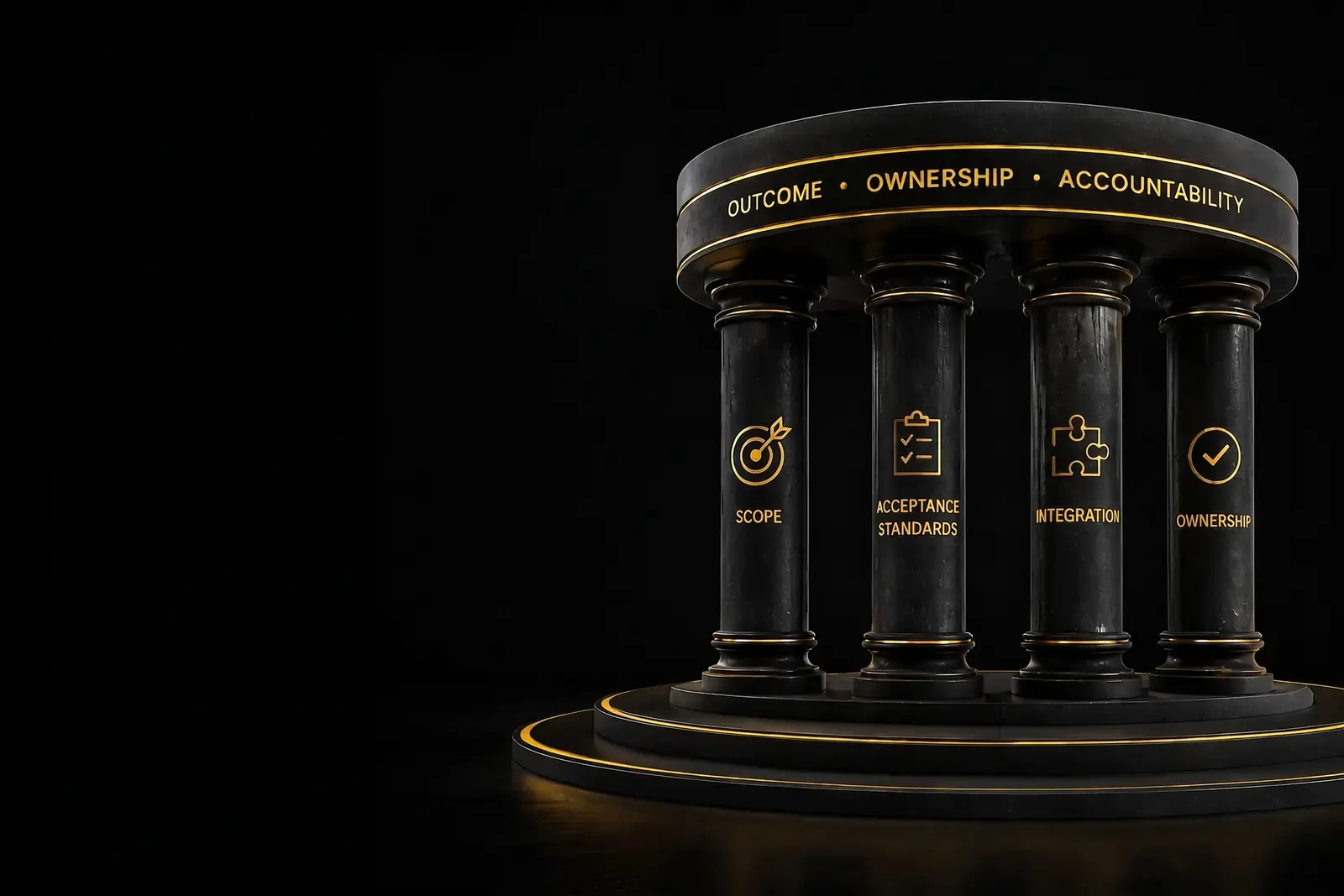
This kind of workflow automation should be treated as enterprise automation infrastructure, not a side experiment. That means starting with a clearly defined workflow, agreeing on what “done” means, and making ownership part of the engagement from the beginning.
Proof in the Work: Claims Intake or Month-End Close
Consider claims intake. Packets arrive through email, portals, and partner feeds. Some fields are incomplete, attachments don’t match, and priority rules vary by product line. Traditional automation captures what it can and sends everything else to an exception queue. By Monday morning, the operations team is working through that queue by hand.
An agentic AI intake workflow can take on much more of that middle ground. It can read the packet, complete fields from the attached documents, check policy rules, route clean claims forward, and send genuine exceptions to a person with a clear explanation of what needs attention. Success can then be measured in practical terms: throughput at an agreed volume, error rates the operations lead is comfortable with, and a handoff that doesn’t leave the team calling the build partner every time something changes.
Month-end close is another good example. Reconciliations, exception lists, and status packages still consume days, largely because people have to piece information together across systems. An agentic AI close-support workflow can pull the right records, reconcile the items that match, and surface only the open issues, along with enough context for finance to resolve them. A successful delivery produces the close package in your environment, on your schedule, with monitoring your team already knows how to use.
The benefit is the same in both cases: the backlog stops feeling like a permanent second job. The workflow has a clear boundary, the build has a real finish line, and the organization isn’t left dependent on the vendor once the system goes live.
What Gets Locked Before Build Starts
Fixed-fee delivery works when price, scope, and the definition of done are agreed together before production code is written. unosquare locks all three in week two, following a week-one Discovery prototype built around your actual workflows and data. See exactly what gets locked and when.
That agreement is what turns APA from a promising experiment into a deliverable your team can evaluate and accept. You’re not buying an open-ended block of hours; you’re commissioning a production workflow your operations team can run.
A Short Owned-Workflow Checklist
You don’t need a lengthy vendor framework to commission APA well. Before committing, get clear on five practical points. Each one should be tied to the workflow you’re actually building.
-
A specific workflow. Claims intake, month-end close support, or another process your team handles every week. “Automate operations” is an ambition, not a workable scope.
-
A measurable definition of done. Agree on throughput, acceptable error rates, integrations, and the real operating conditions the system must handle.
-
Payments tied to production milestones. Each milestone should prove the system works in your environment, not just in a vendor walkthrough.
-
A complete handoff. This should include source code, deployment documentation, recovery steps, API notes, training, and evidence that your team can operate the system on its own.
-
Clear ownership, AI governance, and accountability. Set expectations for code ownership, data privacy, security responsibilities, and, where required, an auditable record of agent decisions.
The checklist helps you commission the work responsibly. The thing you’re ultimately buying is the working system.
How unosquare Ships the Workflow
For APA projects, unosquare uses a four-phase, outcome-based delivery model that typically runs 8–12 weeks. Most of that time is spent building, testing, and handing over the actual workflow, not presenting progress slides. The schedule below shows a full 12-week engagement; for smaller scopes, the build phase is shorter.
Week 1: Discovery. You receive a working prototype based on your processes and data. The team maps integration points and makes feasibility visible before the full build is locked. There’s no commitment required to see that initial version.
Week 2: Solution Architecture. Design and price are locked together. Acceptance criteria are written before the build begins, and change-order caps are set to keep the scope clear for both sides.
Weeks 3–11: Build. Working software is delivered on a regular cadence and tested against the acceptance plan from week two. Operating documentation is created alongside the software instead of being rushed at the end.
Week 12: Deploy and Handoff. The system rolls into production with a cutover plan the operations team can follow, recovery drills, and final acceptance in your environment. Your organization owns the code, data, and roadmap from day one.
If work within the agreed scope takes longer than the fixed timeline, unosquare absorbs the additional cost. Builds start at $100K and are scoped and priced before coding begins. Over 17 years, unosquare has delivered more than 2,500 projects and achieved a client NPS in the top 1% of B2B services.
Custom Build vs. Vendor Platform
Not every automation initiative calls for custom software. RPA, packaged workflow automation, and custom builds each solve different kinds of problems. The better option depends on your compliance needs, the sensitivity of your data, whether the workflow differentiates the business, and what each path will cost over three years.
| Factor | Custom Agentic Build | Vendor Platform |
|---|---|---|
| Compliance requirements | Strict, industry-specific | Standard or configurable |
| Data handling | Sensitive or proprietary | General-purpose acceptable |
| Differentiation | Core competitive capability | Standard workflow |
| Scalability over three years | Better at scale | Lower upfront |
| Ownership preference | Full code ownership required | Subscription acceptable |
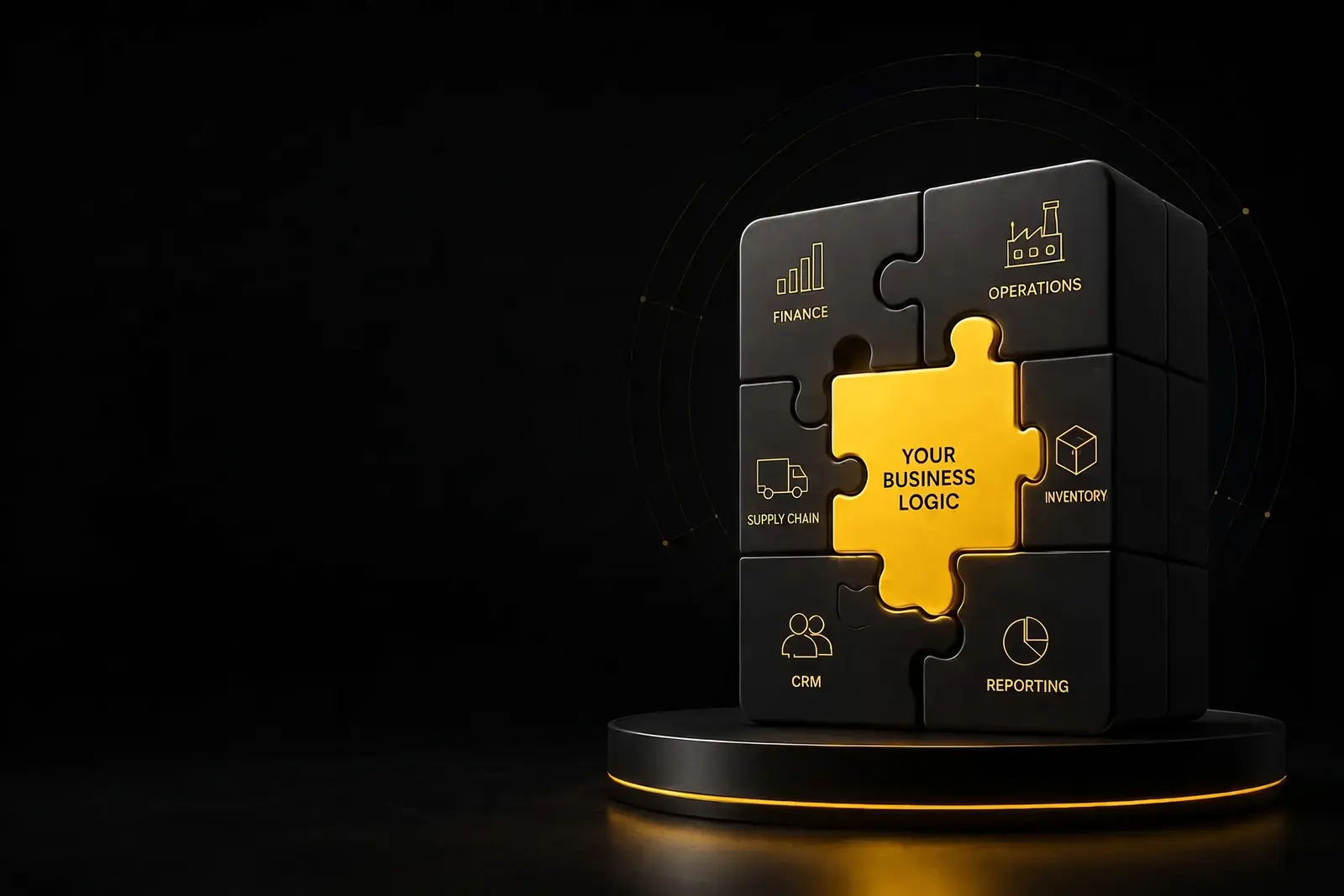
Platforms are often the sensible choice for standard processes that fit existing templates and certifications. Custom agentic AI builds are more compelling when the workflow is proprietary, compliance requirements are unusually strict, or the automation itself could become a capability competitors can’t simply buy off the shelf.
The practical question is simple: are you automating a standard process, or building an operating advantage you want to own?
What Good Looks Like After Launch
When agentic process automation is delivered well, its impact shows up in three measures operations leaders already track:
| Outcome Category | What It Looks Like |
|---|---|
| Throughput improvement | More work completed without adding headcount |
| Error reduction | Fewer exceptions requiring manual review |
| Cycle time compression | Decisions that once took days resolved in minutes |
These gains usually become visible in the weeks after launch, as AI agents encounter live data and teams refine how the workflow operates through feedback loops. Human-in-the-loop checkpoints are normal early on. They serve as practical guardrails while the system establishes a performance record before broader autonomous decision-making is introduced. Predictive analytics can follow once the core workflow has earned the team’s trust.
Fixed-fee APA makes sense when the outcome is clear, the deadline matters, and you need to own the result. For narrow, rule-based tasks, standard RPA will usually be faster and less expensive. If the work is still exploratory, take the time to define the workflow before commissioning a build.
Is This the Right Fit?
Strong fit
-
You can point to a specific workflow, volume target, or business result that defines success.
-
You’re working toward a meaningful deadline, such as a board commitment, regulatory date, or competitive milestone.
-
The system will be business-critical, so full ownership matters and long-term vendor dependency isn’t acceptable.
Better suited to another path
-
The outcome is still taking shape and needs more exploration before anyone can responsibly fix the scope.
-
You need an ongoing product-development team rather than a defined system delivered through a project.
-
The work is limited to predictable, rule-based tasks that standard RPA can already handle well.
See Your APA Workflow Running Before You Approve a Budget Line
In week one, unosquare delivers a working prototype using your actual data and processes, not a mock-up or a slide deck. You can see how the system behaves, review the proposed architecture, and receive a priced statement of work that’s ready for procurement. Start with week-one Discovery. There’s no commitment required.
Frequently Asked Questions
How does a fixed-fee model protect us if the project takes longer than planned?
If work within the defined scope takes longer than the agreed timeline, the vendor absorbs the extra cost. Because scope, price, and timeline are set before coding begins, the vendor carries the delivery risk rather than passing it back to you.
unosquare structures its builds this way intentionally. Pricing is set in week two after Discovery, and the delivery team absorbs overruns that remain within the agreed scope. That gives you a clear view of your budget before the build begins.
What do we actually get in week one during Discovery?
You get a working prototype, not just a proposal.
The team maps your actual workflows and data, identifies the integration points, and uses the prototype to demonstrate the system’s core behavior.
Discovery also produces the inputs needed for pricing: a scoped architecture and a draft statement of work with a clear definition of done. This lets you evaluate both feasibility and the vendor’s ability before committing to a full build.
What happens if our requirements change mid-build on a fixed-fee engagement?
Scope changes are handled through change-order caps set in the contract during week two. If a request exceeds the agreed limit, it becomes a separate piece of work with its own scope and price.
That keeps expectations clear on both sides. You know what the current build includes, and you can see the cost of a new request before deciding whether to approve it.
We have been burned by an outsourcing partner before. How is this different?
The biggest difference is how acceptance and handoff are defined from the start.
In a well-structured APA engagement, the system has to prove itself in your environment and against your data. Handoff includes the source code, recovery documentation, operating procedures, and training your team needs to run it independently.
Before signing, ask the partner to show that it has delivered and handed off projects this way before.
When should we commission custom AI agents instead of buying off-the-shelf tools?
Choose a platform when the workflow is standard, its compliance requirements are already covered, and you don’t need to own or extend the underlying logic over time.
Consider custom agentic AI when the workflow relies on proprietary data, has industry-specific compliance requirements, or represents a capability competitors shouldn’t be able to replicate simply by buying the same subscription. That is especially true when AI agents need to coordinate decisions across multiple internal systems rather than complete a single isolated task.
For high-volume processes where downtime isn’t an option, custom delivery may also offer a better total cost of ownership over three years.
References
-
Gutowska, A. (2024, July 3). What are AI agents? IBM. https://www.ibm.com/think/topics/ai-agents
-
Gartner. (2025, August 26). Gartner predicts 40% of enterprise apps will feature task-specific AI agents by 2026, up from less than 5% in 2025. Gartner Newsroom. https://www.gartner.com/en/newsroom/press-releases/2025-08-26-gartner-predicts-40-percent-of-enterprise-apps-will-feature-task-specific-ai-agents-by-2026-up-from-less-than-5-percent-in-2025
-
Cultu, D., Ganjani, K., Larrea, E., & Müssig, M. (2022, May 2). Claims 2030: Dream or reality? McKinsey & Company. https://www.mckinsey.com/industries/financial-services/our-insights/claims-2030-dream-or-reality
-
APQC. (n.d.). Cycle time in days for finance shared services center to complete the monthly financial close. APQC Open Standards Benchmarking. https://www.apqc.org/what-we-do/benchmarking/open-standards-benchmarking/measures/cycle-time-days-finance-shared
-
National Institute of Standards and Technology. (2026, June 10). NIST AI RMF Playbook. NIST. https://www.nist.gov/itl/ai-risk-management-framework/nist-ai-rmf-playbook
Our Editorial Standards
unosquare is committed to publishing accurate, well-researched information about B2B software delivery. Our editorial team reviews each piece for accuracy and draws on reputable sources, including industry analysts, technology standards bodies, academic institutions, peer-reviewed research, and established enterprise software providers. References are checked for relevance and accessibility at the time of publication.
We work hard to keep everything accurate, but mistakes can happen, and information can become outdated as delivery models, pricing benchmarks, and technology standards change. If you notice an error or something that needs updating, please contact us so our team can review it.
Important Disclaimer
The information on this website is provided for general informational and educational purposes. It is not professional legal, financial, or technical implementation advice and should not be treated as such. Consult qualified technology advisors, legal counsel, or other appropriate professionals before making decisions about software investments, vendor selection, or delivery models. unosquare does not assume liability for actions taken based on the information presented on this site.

Adam Lynch
Chief Operating Officer
Adam Lynch is the Chief Operating Officer at Unosquare. He writes about business operations, the systems that run them, and how software changes the way companies work.