
Finance has a clean-invoice pilot built with generative AI. Straight-through cases (the ones with no missing paperwork) clear in minutes. The board slide looks sharp. Then operations managers ask when accounts payable will run on that same number without calling the vendor. The conversation shifts from celebration to specifics.
The pilot proved something. It did not settle what production means for the floor. Production is one named metric your team runs every day: invoice cycle time, equipment downtime hours, line throughput, or how long exception cases sit in the queue. The pilot is evidence{1}, not the end of the job. That is why the next move is naming the one floor metric the artificial intelligence demo never chose.
The Gap Between a Working Demo and a Floor Metric
The demo landed. The board nodded. You green-lit the next phase. What still has not happened is the decision that actually matters: which floor number production must move. Cycle time, downtime hours, throughput, or exception queue age. Pick one.
Enthusiasm will not close that gap. A written definition of done will. Name one operations management metric. Write pass/fail checks ops can verify on live work. Agree price, schedule, and ownership before anyone commits build budget. Invoice exception queues and unplanned downtime hours follow the same rule: one named number ops tracks after go-live.
The question then shifts from “did the pilot work?” to “can this build stay predictable once that number is locked?”
What Makes a Floor Metric Build Predictable
A named floor metric is only useful if the build stays predictable after the demo fades. Fixed fee makes that possible when REACH locks the metric, the pass/fail checks, and the economics before build begins. You want a partner who is not billing by the hour while the team still figures out the exception queue, the finance or plant-system connections, or the maintenance alert path.
Under REACH, the named metric must move under real daily volume. That requires live connections, monitoring, security controls{4}, and day-to-day readiness so the floor can run on that number every day.
A package that holds up in production usually includes:
| Element | What it produces |
|---|---|
| Pass/fail checks ops can run | Clear criteria ops can verify at every milestone |
| Ready-for-the-floor criteria | A system built to run on real work, not only in demo |
| Fix-at-vendor-cost terms | Missed targets corrected at the vendor’s cost |
| Clear ownership terms | Full ownership and independence after launch |
unosquare writes those elements into Discovery and Solution Architecture before the build budget is committed. Once that package is clear, three decisions still have to land in writing so budget can move.
Three Decisions Before Anyone Commits Build Budget
Predictability is not a slide claim. It is three decisions in writing before any partner commits people to an ops pilot-to-production build. Each one ties back to the named floor metric.
1. A measurable operations outcome
Skip vague goals like “improve operational efficiency.” Write something your floor or back office can track. Examples: cut invoice processing time from days to hours; use machine learning to flag equipment problems early enough that maintenance can act before failure; or reduce manual exception review by an agreed percentage within a named window after launch. That number is what the build is accountable to.
2. Pass/fail checks ops can run
Pass/fail checks (sometimes called acceptance tests) are the specific, repeatable checks that show whether that ops outcome has been delivered. Operations managers should be able to run or witness them without decoding a vendor status deck.
They spell out pass and fail without ambiguity: what data goes in, what should come out, how fast the work must move (cycle time, downtime, throughput, exception rates), what counts as a fair test on real or representative ops work, which systems must connect (finance, maintenance, intake), and what “ready for daily use” means for security and day-to-day operations.
Milestones release when those tests pass, not when the calendar says the work should be complete.
3. Fixed commercial terms
Price, schedule, ownership, and remedies are fixed before the build begins so the ops team is not stuck calling the vendor after launch. That package covers four things:
- Ownership of the code: you own the deliverable unconditionally at acceptance.
- Fix-at-vendor-cost terms: missed milestones are corrected at the vendor’s cost.
- Rules for changes after the price is locked: exceptions must be pre-authorized, documented, and capped.
- Handoff obligations: source code, documentation, step-by-step go-live instructions, and training so your team can run the system.
For leadership, the commissioning sentence is:
Commission X ops metric with Y acceptance tests under Z fixed commercial terms.
When that sentence is complete, the project is ready to start. REACH is how that package stays intact from Discovery through handoff.
REACH: Put the Metric Into Daily Ops
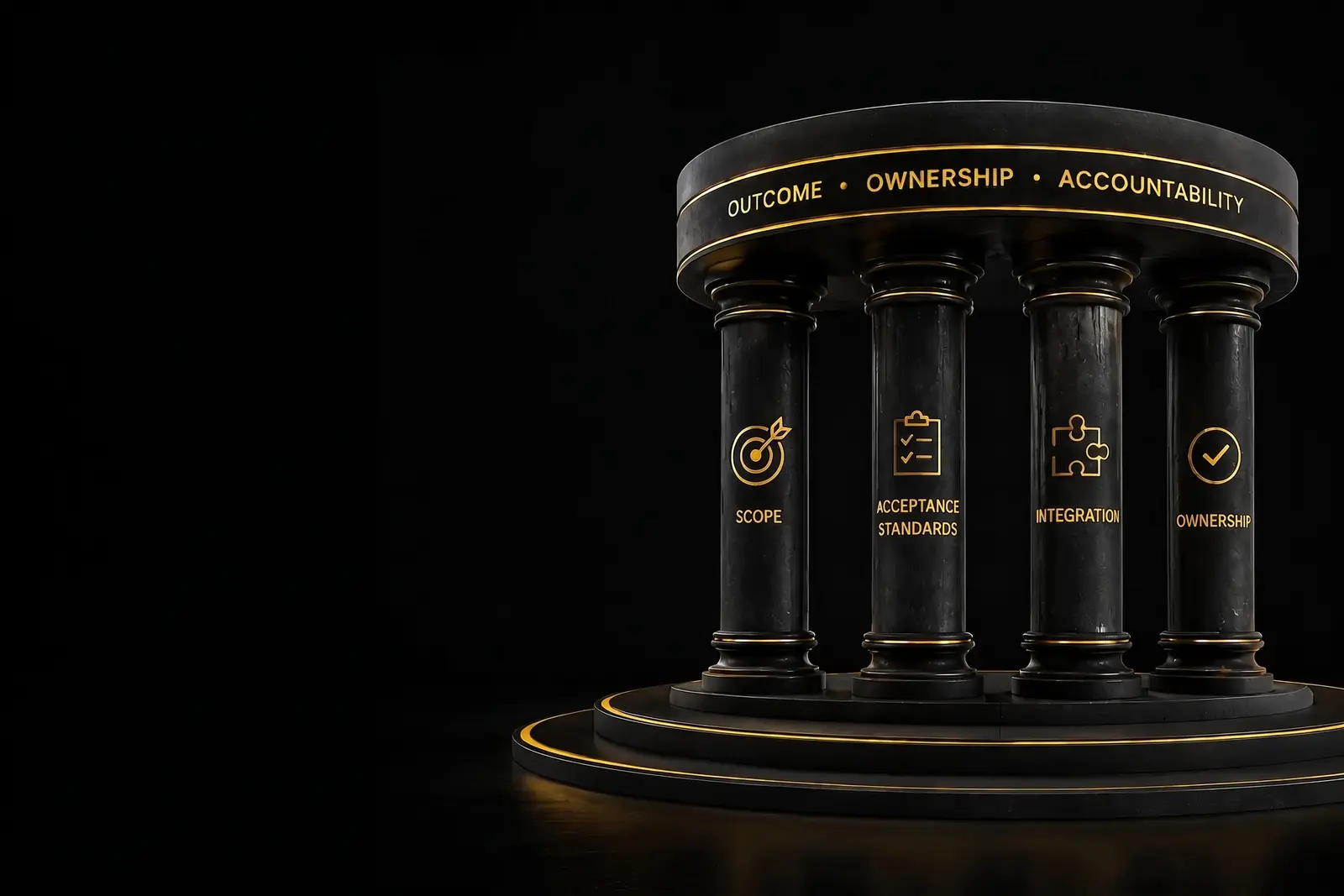
Those three decisions need a single engagement structure so they do not drift after kickoff. REACH is how an ops pilot becomes daily work on a named floor metric. Five decisions belong in the engagement before code starts.
| Letter | Decision | What it means for daily ops |
|---|---|---|
| R | Results criteria | Pass/fail checks ops can run against the named metric; payment milestones release when tests pass |
| E | Economics protected | Fixed price and schedule locked before build; overrun risk stays with unosquare when scope was misunderstood |
| A | Assured readiness proof | Evidence the system runs under real daily volume: monitoring, go-live materials, and day-to-day operating docs{3} in the written acceptance checklist |
| C | Code ownership | Unconditional ownership transfer; source code, history, and setup notes your team needs to maintain the workflow |
| H | Handoff guaranteed | Written transition plan, post-launch support with promised response times, and a checklist your floor team can execute |
Signed documents, not slide language, are what make the named metric runnable on the floor. If this sounds like your org, the clean-invoice scene is usually where the gap shows up first.
Turn the Clean-Invoice Demo Into a Monday Morning Floor Metric
If the pilot looks sharp and the exception queue is still untouched, celebrating the demo will not move the floor. In week one, a prototype on your real ops workflows maps the named metric to work your team already does, so you can see whether production is reachable before you fund the build.
Example: The Clean-Invoice Pilot and the Exception Queue That Remains
REACH is the structure. The stuck state is why you need it. Finance already has a working clean-invoice pilot, sometimes with AI agents clearing the easy path. Straight-through invoices clear in minutes in the controlled demo, and the board slide looks sharp. Someone still asks the operations question: what about the exception queue?
That queue is where the work still lives. Mismatched purchase orders, missing receipts, duplicate vendor bills, and unusual cases the pilot never owned still land on analysts’ desks every day. The pilot proved the concept on clean invoices. Invoice cycle time and exception handling time are not yet how accounts payable runs every day.
The same pattern shows up elsewhere. Predictive analytics alerts that never reach the maintenance team that acts on them. Throughput workflows that ignore the shift where variance actually shows up.
Marketing ops sees it when a lead-routing pilot or virtual assistants clear clean cases in the demo, then someone asks about mismatched sources, incomplete tracking, and leads that still need manual review before sales can act. Supply chain management and logistics teams hit the same wall when a demand forecasting or inventory management pilot looks sharp in the demo and still leaves the floor queue untouched.
REACH turns that stuck queue into a live capability your AP, plant, or campaign ops team can run without calling the vendor. If the gap between your pilot and your floor metric sounds like one of those cases, the week-by-week plan is how that stuck queue becomes Monday-morning work.
How unosquare Structures Accountable Delivery
The exception queue is still on analysts’ desks. The phases below clear it week by week against the named floor metric under REACH. Each phase produces what the next one needs.
Discovery | Week 1
Discovery answers one question before anyone commits budget: can this pilot become daily work on a named floor metric, using systems and data you already run?
For the accounts payable case above, the controlled demo cleared clean invoices in minutes. Discovery runs the exception queue instead: mismatched purchase orders, missing receipts, duplicate vendor bills.
unosquare maps that workflow against your finance systems, samples the messy inputs analysts actually touch, and delivers a working prototype that shows exception queue age or invoice cycle time on real data, not demo-only cases.
You leave with a prototype tied to the target metric, a risk list (connection gaps, data quality, compliance constraints), a report on whether your data is ready to use, and a draft written acceptance checklist your team can read without decoding vendor language. The prototype is delivered at no cost, with no obligation to continue, so you know whether the named metric is achievable before you sign a build.
Solution Architecture | Week 2
Week 2 turns Discovery evidence into a locked definition of done. The metric gets a number operations already tracks. Examples: cut exception queue age from four days to one, reduce unplanned downtime hours by an agreed percentage, or hit a throughput target per shift.
unosquare finalizes the written acceptance checklist against that number, signs the written scope document (what workflow is in, what stays out), and locks fixed commercial terms before Week 3. Price, schedule, ownership, fix-at-vendor-cost terms, and rules for later changes lock together. “Done” on the floor becomes a test ops can run, not a slide definition.
Build | Weeks 3 to 11
Build proves the named metric under conditions that resemble daily ops, not a controlled demo. For invoice work, that means finance-system connections are live, exception paths are handled (including where AI agents own the straight-through path), and cycle time is measured on a normal-day workload.
For maintenance workflows, that means machine learning alerts reach the team that acts on them, and downtime is tracked against the agreed threshold.
Working software ships on a regular schedule. Each milestone runs the written acceptance checklist against the named ops outcome. Payment releases when tests pass on the floor metric, not when a status deck says the calendar milestone arrived.
Deploy and Handoff | Week 12
Deploy is when the pilot becomes how operations management runs Monday morning. The system goes live with monitoring that shows whether the named metric still holds under real load: queue age, downtime hours, units per shift, or exception rates leadership already reports.
unosquare delivers source code, step-by-step go-live instructions, operating instructions, update notes, live views of the named metric, and structured training. Your team owns routine changes without calling the vendor. At acceptance, REACH is complete: results criteria ops can verify (R), economics that stayed fixed (E), assured readiness proof under real daily volume (A), code ownership (C), and a handoff your floor team can execute (H).
The typical timeline is 8 to 12 weeks. Builds start as low as $100K, fixed fee, scoped before code is written. If the build runs over because scope was misunderstood, that cost belongs to unosquare, not to you.
Accountability continues after acceptance. The metrics that matter after launch are:
| Metric | What it measures |
|---|---|
| Operations outcome performance | Whether the target metric (cycle time, downtime, throughput, exception age) is being hit consistently |
| Manual work reduced | How many hours of manual ops work have been eliminated |
| System reliability | How often the system stays available versus the support promises in the contract |
| Time to value | Weeks from acceptance to measurable impact on the named ops metric |
Write a 30-day stabilization review, a 90-day performance review against the target ops outcome, and a 6-month look-back into the contract so the next build’s acceptance criteria inherit what the floor learned.
Once the path is clear, a few floor realities still shape what Discovery must surface before price locks.
What Shapes Scope, Timeline, and Cost on the Floor
Handoff puts the named metric on the floor. Scope, timeline, and cost still move with a few practical factors. Surface them in Discovery so the fixed price reflects real daily volume.
Data readiness
Ops automation needs data that is available, connected, and fit for the named metric. Many operations management workflows also rely on messy inputs: emails, scanned documents, intake forms, contracts, logs, and notes.
Natural language processing (software that reads that text the way your analysts do) can turn that pile into insights your team can act on when the data is accessible and reasonably clean. Data quality is often the most useful Discovery finding for invoice, unusual-equipment, or maintenance workflows. Surface it in Week 1 so the build plan reflects reality.
Connection complexity
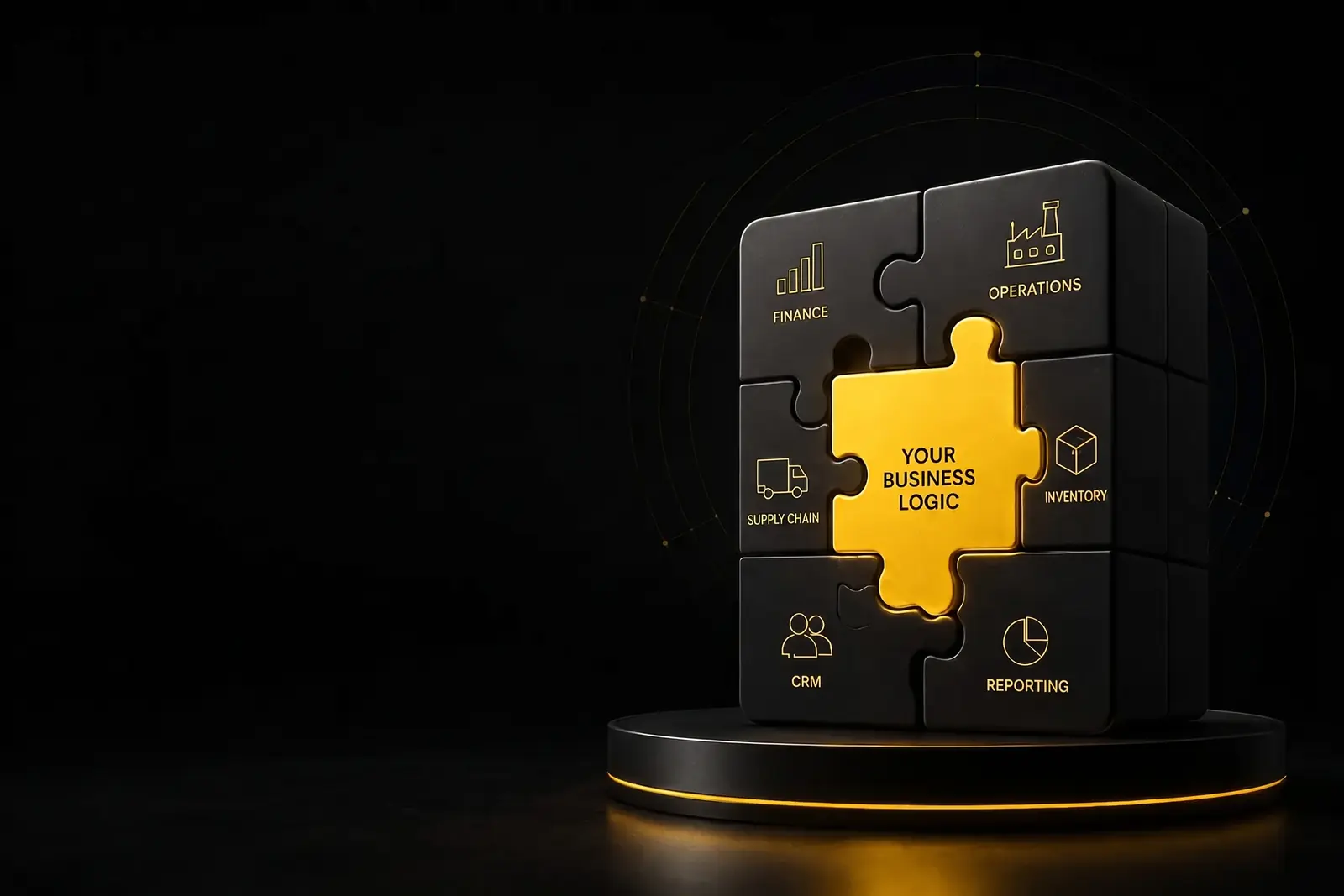
Every connection between the new system and your existing operations tools, finance systems, CRM, or other enterprise platforms adds scope. Discovery should produce a map of required connections that identifies what must link, estimates effort, and clarifies known requirements. Links to older RPA bots and systems that still need a bridge are especially common in operations builds. The fixed price should reflect the connection count before code starts.
Compliance requirements
Regulated industries add scope to any ops automation project. Healthcare, financial services, and other regulated environments may require additional controls: where data lives, records of what happened and when, who can access what, encryption (scrambling data so only authorized people can read it), decision records ops can review when a case is challenged, cybersecurity reviews, and security testing.
Those requirements belong in the written acceptance checklist for the named floor metric so ops can verify them at acceptance, not in a separate compliance workstream after go-live. unosquare delivers security-tested, enterprise-ready systems designed for real load from day one, with healthcare-ready practices where those standards apply.
Operational visibility
As more operations functions run on automated workflows, the floor needs to see whether the named metric still holds under real daily volume. Operations monitoring tied to that number (including AIOps when system health sits behind the floor metric) helps detect drift in cycle time, downtime, throughput, or queue age before leadership finds out from a board deck. That monitoring should be a contractual deliverable at acceptance. When it is in the written acceptance checklist, the daily way of working stays visible to the team that runs it.
Once data, connections, compliance, and visibility are in the written acceptance checklist, the remaining question is fit: does your pilot gap match the conditions that make this model work?
When a Floor Metric Build Is the Right Fit
Naming a floor metric as daily ops work fits best when the ops pilot you need in production meets three conditions.
1. The operations outcome is measurable
If success can be stated in numbers your ops team already tracks on the floor, a floor metric build can enforce it. The model works well for invoice cycle time, exception handling in sourcing{2}, maintenance downtime, throughput, lead-routing queue age, campaign ops exception handling, demand forecasting accuracy, inventory management targets, or logistics cycle time.
Open-ended research or early experimentation belongs in Discovery first. Lock a named metric as how the floor runs every day only after that.
2. The project has defined scope
When the ops workflow in scope is stable enough to write down (including what stays out, such as adjacent exception types or sites), agreeing scope creates clarity and protection. Projects that still need alignment on change management, decisions across teams, or early experimentation are well served by Discovery before committing to a fixed build.
3. The timeline is real
Board mandates, production deadlines, and competitive windows all create useful clarity for moving a pilot into daily ops use. When there is a real deadline, committed delivery gives leadership dates they can fund and report against.
If you have a measurable ops target, defined workflow scope, and a real deadline, start here for operations management initiatives ready to move beyond pilot mode:
Can we define what done looks like for this ops metric, and can operations test for it?
unosquare has completed more than 2,500 projects across 16 years of engineering delivery, with a client NPS in the top 1% of B2B services.
Operations management teams that enter with a named floor metric, pass/fail checks ops can run, and REACH locked before code starts get production-ready software they can own, run, maintain, and extend without calling the vendor for every change.
If that checklist matches your situation, the next step is a week-one prototype that settles the floor metric before anyone commits build budget.
One Week to Settle the Floor Metric Before You Build
Fit is settled when the metric, the workflow, and the deadline are real. unosquare‘s week-one process turns a successful ops pilot into a production plan for one named workflow and metric.
You leave with a working demo of your specific operations use case (invoice processing, predictive maintenance, AI agents on an exception path, lead routing, or any measurable ops workflow), a risk list, a data-readiness report, a draft written acceptance checklist, and a fixed-fee build plan. No commitment required to see it.
The prototype’s job is to prove whether the target floor metric is achievable on the workflows and data your team already runs, so Week 2 can settle scope and price.
To prepare, appoint a business owner who can define the target ops outcome in measurable terms. Identify one primary connection point to validate first (often finance systems, intake, or maintenance systems). Provide representative data samples from your operational environment. You do not need a complete data set. You need enough evidence to confirm whether the direction is sound for daily use.
Start your week-one prototype and leave with a risk list, a data-readiness assessment, and a clear picture of what production actually costs for that metric.
Frequently Asked Questions
After the floor metric and the week-one path are clear, the remaining questions are usually about volume, exceptions, and what happens when the pilot looked good but the queue did not clear.
How do we move from an ops pilot to production software?
A pilot proves the concept in a controlled setting. Production needs one named floor metric as daily work, plus pass/fail checks ops can verify, real-system connections, day-to-day readiness, and a handoff that leaves your team owning the code. Lock that package with REACH in writing before code starts.
What do we get in Week 1 during Discovery?
You receive a working prototype that shows your target operations metric on the workflows your team already runs. You also leave with a risk list, a report on whether your data is ready to use, a draft written acceptance checklist, early evidence of how many systems must connect, and a recommendation on whether to proceed. These are not presentation slides. They are contractual inputs for deciding whether to commit to the fixed-fee build. Discovery requires no commitment from your side, and the prototype is delivered at no cost.
How is scope agreed before code starts, and who owns scope-creep risk?
unosquare‘s Discovery phase produces a written scope document and written acceptance checklist before the build begins. The scope document defines exactly what ops workflow will be built. The checklist defines exactly how “done” will be measured on the named metric. Both are signed before Week 3 starts. If the build runs longer than planned because scope was misunderstood, that is unosquare‘s cost, not yours.
How do we stay informed without managing the vendor day to day?
unosquare delivers on a regular schedule with pass/fail check results at each milestone. You receive working outputs, not status reports. Each milestone either passes the agreed ops tests or it does not. That structure gives you visibility into progress without creating project management overhead for your team.
How long does the full process take?
The typical timeline moves from Week 1 Discovery and prototype, through Week 2 solution architecture and fixed commercial terms, into Weeks 3 to 11 of build, and closes with Week 12 go-live and handoff. The full process typically takes 8 to 12 weeks from project start to a production-ready, client-owned system running on the named floor metric.
If your ops pilot needs to become how the floor works every day for a concrete metric, unosquare turns the target workflow into a scoped prototype, written acceptance checklist, and fixed-fee build plan before code starts. Request a free prototype to see the workflow, the connection risks, and the production path on systems you already run.
References
- McKinsey & Company. (2025). Beyond automation: How gen AI is reshaping supply chains. McKinsey & Company.
https://www.mckinsey.com/capabilities/operations/our-insights/beyond-automation-how-gen-ai-is-reshaping-supply-chains - McKinsey & Company. (n.d.). Redefining procurement performance in the era of agentic AI. McKinsey & Company.
https://www.mckinsey.com/capabilities/operations/our-insights/redefining-procurement-performance-in-the-era-of-agentic-ai - unosquare. (n.d.). 6 best practices for quality assurance testing for web applications. unosquare Blog.
https://www.unosquare.com/blog/6-best-practices-for-quality-assurance-testing-for-web-applications/ - National Institute of Standards and Technology. (2024). The NIST Cybersecurity Framework (CSF) 2.0. NIST Computer Security Resource Center.
https://csrc.nist.gov/pubs/cswp/29/the-nist-cybersecurity-framework-csf-20/final
Our Editorial Standards
unosquare is committed to providing accurate, well-researched B2B software delivery information. Our editorial team reviews all content for accuracy and relies on reputable sources including industry analysts, technology standards bodies, academic institutions, peer-reviewed research, and established enterprise software providers. All references are verified for accessibility and relevance at the time of publication.
We strive for accuracy in everything we publish, but we recognize that mistakes can occur and information can become outdated as delivery models, pricing benchmarks, and technology standards evolve. If you notice an error or outdated information, please contact us so we can review and update our content.
Important Disclaimer
The information provided on this website is for general informational and educational purposes only. It is not intended as, and should not be interpreted as, professional legal, financial, or technical implementation advice. Always consult with qualified technology advisors, legal counsel, or appropriate professionals before making decisions about software investments, vendor selection, or delivery models. unosquare does not assume liability for actions taken based on the information presented on this site.
Unosquare Staff
Engineering & Design Team
The Unosquare team brings together engineers, designers, and strategists with decades of experience building software across industries. We write about nearshore development, digital transformation, and the craft of shipping great products.