
Lean User Experience (UX) Design is a customer-centric methodology focusing on delivering value to users. It achieves this through an iterative process of experimentation, collaboration, communication, and learning. Lean UX Design reduces waste and maximizes efficiency by adopting a “build, measure, learn” cycle that encourages rapid prototyping and testing.
The approach is grounded in the principles of lean methodology, widely used in manufacturing and software development. Cross-functional teams collaborate on UX design concepts to create simple, intuitive products that meet users’ needs and goals. By embracing rapid experimentation and continuous learning, designers can validate their concepts and develop products that deliver exceptional user experiences.
Understanding the Lean UX Design Model
This user-centered design approach emphasizes the importance of rapid prototyping, feedback, and iteration. The Lean UX Design model follows a three-phase cycle: Think, Make, Check. This helps teams focus on their users’ needs and prioritize their work effectively.
The Three-Phase Cycle
In the Think phase, the teams identify design problems they want to resolve and generate ideas for potential solutions. They conduct research and gather insights about their target audience and then use this information to create user personas, user journeys, as well as other design artifacts.
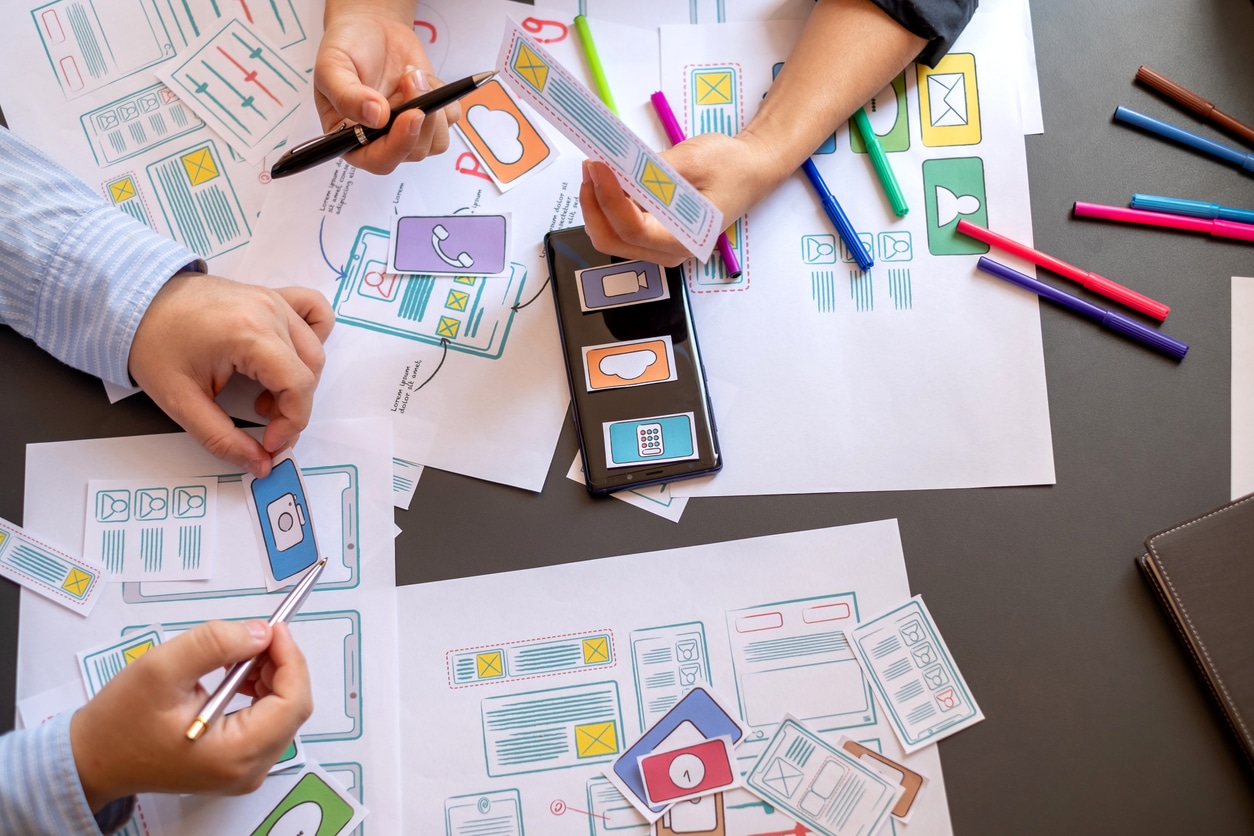
Teams create low-fidelity prototypes of their solutions in the Make phase, such as wireframes or mockups. These prototypes are intended to be quick and simple to produce, allowing the team to gather user feedback early on.
Designers then test these prototypes with users and iterate on them based on the feedback received. In the Check phase, teams evaluate their solutions’ success using metrics as well as other data to measure how well their design meets user needs and make adjustments as necessary.
As the final phase in the Lean UX Design methodology, Check involves various techniques. This includes A/B testing, usability testing, site analytics, customer meetings, and feedback systems to gather data and insights about the user’s behavior and experience with the product or service. In fact, A/B and usability testing are pivotal to Lean UX Design’s success. Both enable designers to iterate quickly and make informed decisions based on real user data.
Ultimately, the Check phase helps determine whether the product or service meets the user’s expectations and identifies areas for improvement. Agile teams rely on information collated from these three phases to inform the next Lean UX Design cycle, starting again with the Think phase. By following the “Think, Make, Check” model, developers can quickly iterate on their designs, validate their assumptions, as well as create user-centered products.
Benefits of Lean UX Design in Validating Product Concept
The Lean UX Design system emphasizes the importance of rapid experimentation and iteration to create user-centered products. By adopting this approach, teams can move quickly from ideation to implementation, resulting in faster time to market. Also:
- The methodology encourages cross-functional collaboration and co-creation among teams, helping teams optimize resources and reduce waste on redundant designs.
- Lean UX Design concept is flexible. This means designers can adapt quickly, if necessary, and adjust their approach based on user feedback.
- The cyclical process prioritizes continuous learning and improvement, ensuring the final product always evolves to meet its intended goal.
- Lean UX Design creates user-focused products and experiences while reducing development time, effort, and cost through frequent, low-risk experiments and testing.
- The design approach is also cost-effective. It minimizes the likelihood of investing in a product that does not meet user or market demand.
Lean UX Design lets you quickly validate your product concept, iterate on design, and lower development time and cost.
Catalystux Staff
Engineering & Design Team
The Unosquare team brings together engineers, designers, and strategists with decades of experience building software across industries. We write about nearshore development, digital transformation, and the craft of shipping great products.