

When a digital product fails, it’s rarely because of bad code alone. More often, it’s because design and development were treated as separate worlds instead of two halves of the same process.
Too many organizations still confuse product design with product development, or worse, treat design as “making things pretty” after code is written.
The result? Products that function but don’t delight, scale, or align with business goals. In today’s landscape, where expectations evolve fast and teams are distributed globally, this separation is costly.
This article breaks down:
- The real difference between design and development.
- How data and AI make both disciplines stronger.
- Why nearshore delivery makes scaling teams easier.
Product Design: Solving Problems Before Writing Code
Product design is about understanding users and crafting solutions before development begins. It blends research, creativity, and strategy to ensure the product is intuitive and aligned with business goals.
Key elements:
- Data-driven personas: replacing assumptions with insights from analytics, AI, and machine learning. A Harvard study showed developers using AI assistants explored ~22% more languages, demonstrating how data and AI expand design perspectives.
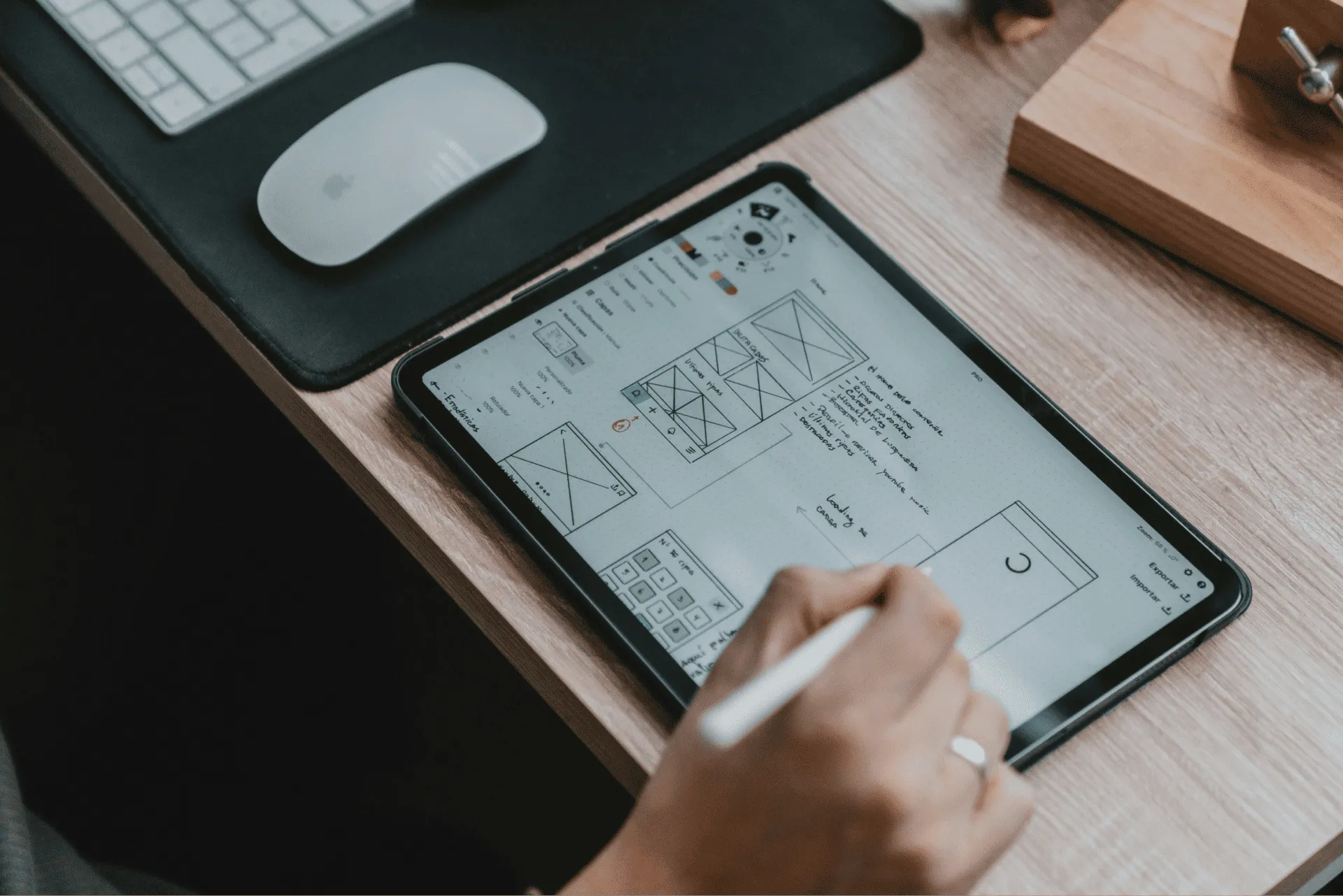
- Wireframing and prototyping : rapid iteration powered by modern tools. Platforms like Figma now embed AI features that flag usability issues and suggest layouts.
- UI/UX : balancing brand, aesthetics, accessibility, and personalized experiences.
- Agile integration : embedding design inside iterative cycles, not outside them.
Product Development: Bringing Design to Life
Once design defines what to build, development makes it real.
This includes:
- Front-end engineering: translating UI/UX into interactive interfaces.
- Back-end systems: databases, APIs, and logic to power the product.
- Quality assurance: testing for performance, compliance, and security.
- DevOps pipelines: ensuring design decisions translate into scalable, maintainable code.
Even the most beautifully designed concept will fail without robust development and vice versa.
Think of design as the blueprint and development as the construction. One without the other is incomplete.
Product Design vs. Product Development: Side-by-Side Comparison
| Aspect | Product Design | Product Development |
| Main Focus | Understand the problem and the user; define what to build and why. | Build the solution; turn designs into reliable, scalable software. |
| Stage in Lifecycle | Early discovery and definition, continues iteratively. | Implementation, integration, testing, release. |
| Core Activities | User research, problem definition, flows, wireframes, prototypes, validation. | Front-end, back-end, APIs, QA, performance, security, DevOps/CI-CD. |
| Artifacts | Personas, journeys, wireframes, prototypes, acceptance criteria. | Source code, automated tests, pipelines, infrastructure as code, technical docs. |
| Deliverables | Product brief, validated prototype, prioritized backlog. | Working software increments deployed in dev/stage/prod. |
| Key Skills | UX research, UX writing, information architecture, interaction, UI, analytics. | Software engineering, architecture, testing, observability, security, SRE/DevOps. |
| Success Metrics | Task success, time-to-first-action, NPS/CSAT, conversion rate, adoption. | Lead time, deployment frequency, change failure rate, MTTR. |
| Typical Risks | Unvalidated assumptions, scope creep, technically unfeasible solutions. | Technical debt, over-engineering, performance bottlenecks, security flaws. |
| Where AI Helps | Analyzing feedback, suggesting layouts/content, generating variants of copy/prototypes. | Code completion, test generation, bug detection, AI-assisted reviews, infra-as-code templating. |
| Role of Data | Dynamic personas, segmentation, A/B testing, hypothesis-to-metrics tracking. | Telemetry, feature flags, error budgets, capacity planning, SLIs/SLOs. |
| Stakeholders | Product, UX, Marketing Insights, Customer Support, Compliance. | Engineering, QA, SRE/Infra, Security, Product for prioritization. |
| Nearshore Fit | Continuous discovery in shared time zones; design crits and user testing in real time. | Standups and pairing without friction; follow-the-sun QA and controlled releases. |
| Role of COEs | Research standards, accessibility, design systems, component libraries. | Golden paths, reference architectures, QA/security guides, CI/CD and observability practices. |
| Outcome if Done Right | User-centered roadmap that reduces rework and speeds adoption. | Stable, secure, and scalable software that meets business goals. |
How AI and Data Blur the Lines
Generative AI is reshaping both design and development:
- AI accelerates workflows: automating repetitive coding and suggesting design patterns. GitHub Copilot has shown it can cut time spent on routine coding tasks by up to 50%.
- Data validates decisions: analytics ensure design choices are backed by evidence, not assumptions.
- Bridging intent and execution: AI tools now translate design intent into usable code snippets, reducing friction between disciplines.
AI isn’t replacing designers or developers, it’s making collaboration between them non-negotiable.
Why Nearshore Delivery Is Key
Scaling design and development takes more than talent, it takes alignment.
Nearshore teams provide:
- Shared time zones for real-time collaboration.
- Access to UX, front-end, back-end, and AI expertise across Latin America.
- Cultural proximity that speeds onboarding and integration.
For companies building cross-functional design + development teams, nearshore models reduce friction and accelerate delivery.
Design defines the vision. Development brings it to life. Success comes only when both work together; with data insights, AI-driven efficiency, and delivery models that scale.Talk to us today to see how our design and development teams can support your next project.