When leadership decides the platform has to move this year, budget is rarely the first argument. The fight is which modernization strategy to fund. Move it as-is, improve what you have, replace it, or build beside it: all four can sound reasonable in the same room. That is usually when partner talks begin, before anyone has settled what the organization is actually buying.
Leadership needs two answers before spend is committed: which path matches the trigger that forced the conversation, and what must be true before you sign.
Get the path right first, and the partner conversation stops being a feature bake-off. It becomes a commercial commitment tied to a specific outcome.
What Makes a Path-Choice Decision Ready to Buy
Before anyone issues an RFP or selects a delivery partner, leadership needs plain answers to three questions:
- What business pressure is forcing the move now?
- Which path actually fits that pressure: move as-is, improve what you have, replace it, or build beside it?
- Is “done” clear enough that payment only releases when that path delivers something ready for real users?
unosquare settles those three answers in week one, with a path recommendation grounded in what is actually in your system. The matrix below is where most leadership teams start that conversation.
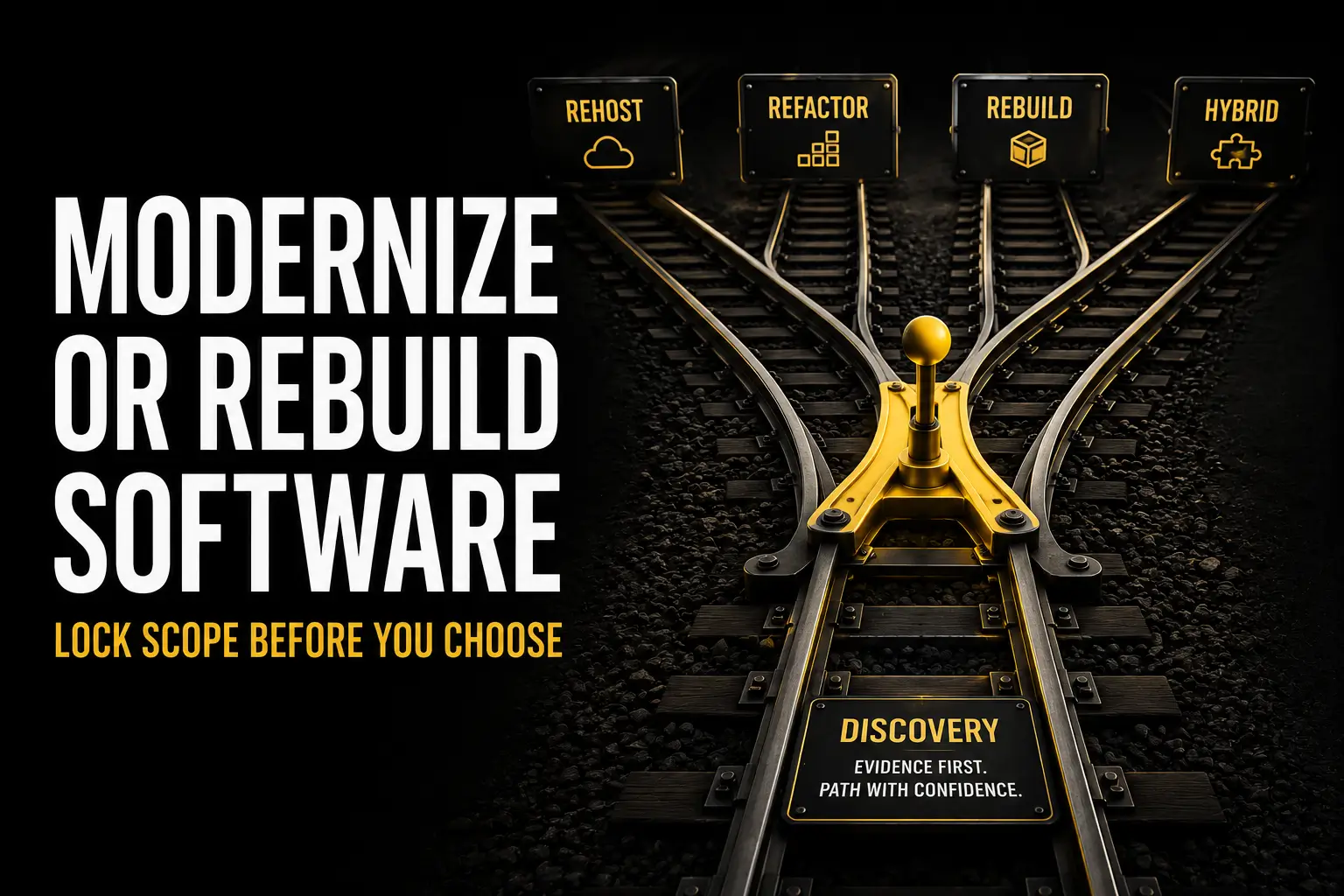
The Executive Decision Matrix: Comparing Modernization Paths at a Glance
Those three questions need a shared vocabulary for the options on the table. The choice between modernizing and rebuilding{1} is rarely either/or. Most legacy systems sit somewhere on a spectrum of software modernization paths. Each option carries a different timeline, cost shape, and operational load.
The table below is a starting point for that leadership conversation. These are directional benchmarks from common industry patterns, not quotes.
| Modernization Path | In plain terms | Typical Business Trigger | Relative Timeline | Disruption Level | What to Plan For |
|---|---|---|---|---|---|
| Rehost | Move the system as-is to new hosting (same software, new home) | Infrastructure cost pressure, data center exit | Fastest: weeks to months | Low | Problems in the old system come with you; schedule follow-on work on purpose |
| Refactor | Improve parts of the current system without replacing all of it | Performance gaps, scalability limits, recurring production issues | Moderate: months | Low to moderate | Keep each cycle tied to the business outcome you set out to unlock |
| Rebuild | Replace the system with a new one built from scratch | Capability gaps, unsupported platforms, compliance mandates | Longest: quarters | High upfront | Stage acceptance so timeline and budget stay tied to verified delivery |
| Hybrid | Build the new capability beside the old system and switch in stages | Complex systems with separable capabilities | Staged: phased over quarters | Low to moderate per stage | Design how the pieces connect early so each stage ships cleanly |
Fund the business outcome you are ready to unlock, on the timeline it needs to ship, with a path you are prepared to pay for. System change follows that choice.
A system that works today but must meet a compliance deadline in six months needs a different path than one that needs more capacity under load.
Discovery turns these directional benchmarks into realistic estimates for the system in front of you{2}.
That matters most when the broader digital transformation strategy depends on measurable ROI, and when technical debt is already shaping which modernization strategies are even viable.
The next section shows what happens when a real trigger forces the choice before anyone has settled the path.
Example: When the Next Product Capability Forces a Path Choice
Directional benchmarks are useful until a live trigger forces the room to pick. A CPO often faces the same bind.
The roadmap needs a customer-facing capability this quarter: self-serve quoting, a partner portal, or real-time inventory for a new channel. The core platform still runs today’s business cleanly, and revenue depends on it. The new capability depends on something the current system was never built to support.
Partner conversations start anyway, before anyone has named move-as-is, improve-what-you-have, replace, or build-beside.
A CMO faces the parallel bind. A campaign or marketing-technology initiative needs capability the current tools cannot deliver this quarter: personalized offer routing, a partner co-marketing portal, or attribution that ties spend to pipeline. Today’s campaigns still run. The gap is the new channel or automation the growth plan depends on.
Improving the current system looks cheaper until discovery shows the missing capability sits behind limits that system was never designed to support, including scalability ceilings and accumulated technical debt.
A full rebuild looks cleaner until leadership remembers the platform still carries revenue every day. Building beside the old system looks pragmatic, but only if “done” names one shippable capability instead of a vague modernization program.
unosquare‘s week-one discovery runs that test on your system: a working prototype of the capability, evidence for the path recommendation, and a fixed-fee proposal matched to the path you chose. Most builds move from discovery through production in 8–12 weeks, with full code ownership at handoff.
WEIGH is the checklist that settles the path from that evidence before a contract gets written.
WEIGH: Five Points That Settle Path Choice
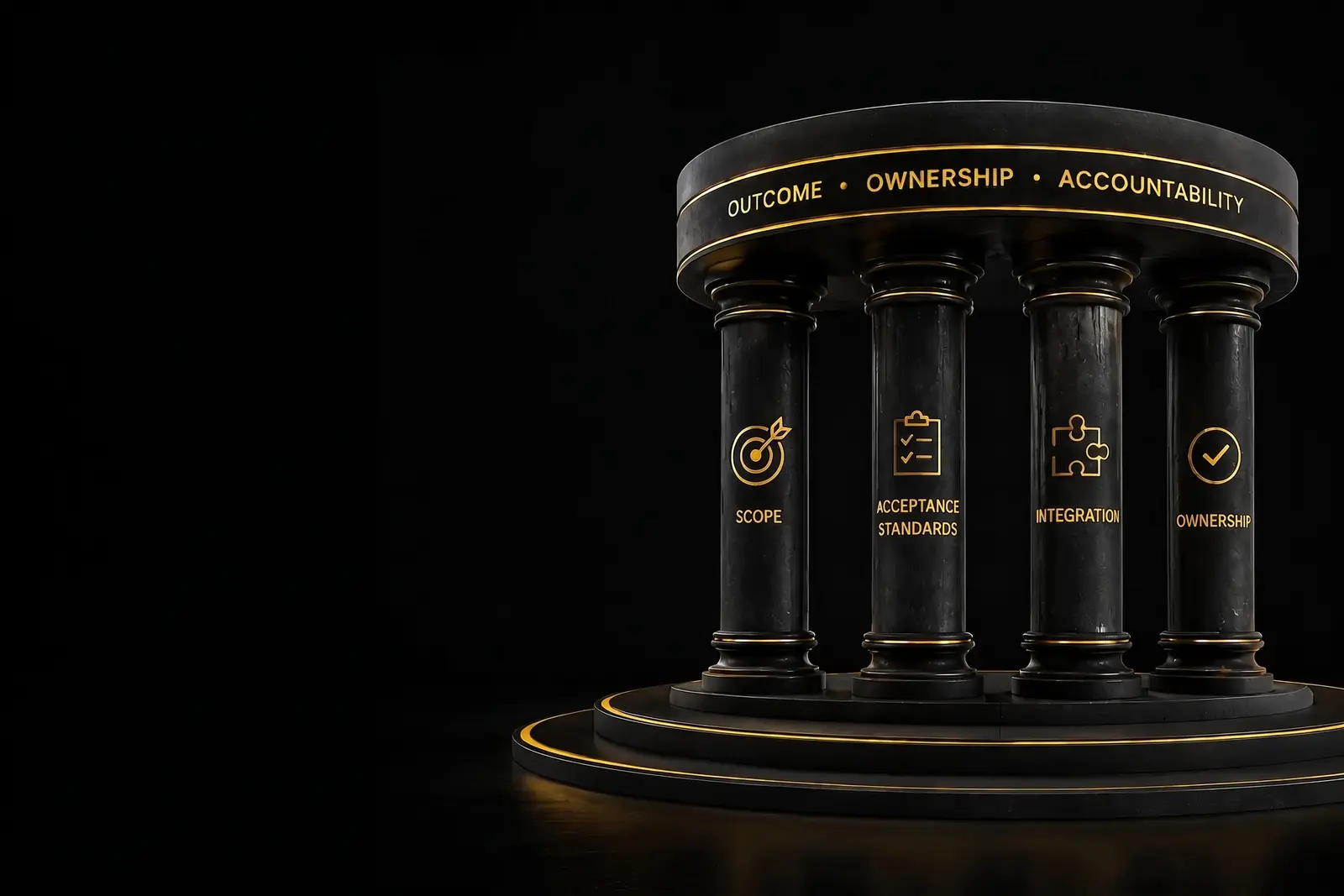
The CPO and CMO binds above show why path choice fails when the room debates options without evidence. WEIGH is the pre-buy checklist, not the delivery playbook. Five decisions determine whether a path recommendation will hold up under scrutiny:
- W: what “done” means for the path you are about to fund
- E: evidence from your actual system, not a generic benchmark
- I: ownership of what gets built
- G: how your team will maintain it
- H: handoff and switchover terms that make the buy complete
unosquare weighs each one against your trigger and your system before you fund an engagement.
| Letter | Checkpoint | What gets settled |
|---|---|---|
| W | What “done” means | Payment milestones tied to production-ready acceptance criteria. A shared acceptance process. Billing against results you can see, not hours on a timesheet. |
| E | Evidence from the system | A clear list of what you have and what depends on what. Live tests on data that behaves like production. Findings scored for cost and timeline impact. A path recommendation that cites your actual system, not generic benchmarks. |
| I | Ownership of what gets built | Transfer language for code, settings, access credentials, and documentation. Payment release at handoff. Defect thresholds and warranty terms in the proposal. |
| G | How your team will maintain it | Systems your team can extend without the delivery partner. Clear connection points and operating guidance for the next owner. Quality standards that keep new work maintainable from day one. |
| H | Handoff and switchover | Staged switchover with named decision owners. Pause or reversal conditions. Monitoring during the switch. Handoff criteria so your team runs independently. |
Those five points belong in the week-one prototype review, the fixed-fee proposal, and the contract language that will govern delivery. They settle which path to fund. They do not replace the later work of running that path once the decision is made.
What remains is matching each trigger to the path it typically points to.
Choose the Path From Evidence, Not From the Loudest Slide
If rehost, refactor, rebuild, and hybrid all still sound reasonable in the same room, do not fund a preference. In week one, live tests on your system return a working prototype and a fixed-fee proposal so the path you buy matches the trigger that forced the conversation.
Side-by-Side Profiles: When Each Modernization Path Makes Sense
WEIGH settles what must be true before you sign. The profiles below show which option each trigger typically points to, and where the trade-offs show up once a path is on the table.
Rehost: Move the System As-Is
Moving an existing system as-is{1} to new hosting without changing how the software works is usually the fastest path and the least disruptive in the near term. Leaders often hear this called a lift, or “lift and shift.” Rehosting is still the industry label for that move.
The trigger is often urgency with a clear operational payoff: a data center contract is ending, hosting spend needs to come down quickly, or a broader cloud migration requires the system to relocate.
The trade-off is honest and manageable. Problems in the old system come with you, so follow-on improvement work should be scheduled on purpose. A lift is the right call when the immediate operational need is real and near-term feature or compliance work can wait.
Refactor: Improve What You Have
Refactoring fixes the parts that are slowing you down{1} (speed issues, hard-to-change areas, or recurring production friction) without replacing the entire system. It is one of the most common modernization strategies when the core product still fits.
It fits when the system mostly works and the business wants to remove drag: delayed feature releases, recurring incidents, or scalability limits that are starting to show up in production. Targeted reengineering of those hot spots often beats a full rewrite.
Phased acceptance with defined success measures keeps refactoring on track. Each cycle can surface new opportunities. Checkpoints keep those opportunities tied to the original business outcome, including code quality standards your team can maintain after handoff.
When discovery shows refactoring cannot close the gap, leadership makes the rebuild call with evidence, not because the slide deck defaulted to rewrite.
Rebuild: Replace It
A full rebuild replaces the existing system with a new one designed from the ground up. It carries the longest timeline, the highest upfront investment, and the most organizational change during transition.
When the business trigger calls for it, it is also the cleanest path to lasting capability, and often the cleanest form of application modernization when a monolithic architecture can no longer support the roadmap.
The triggers are specific: a system that cannot support a compliance requirement, a capability gap that patching will not close, or a legacy platform losing vendor support.
Rebuilds also surface when rearchitecting into microservices (or another modular shape) is the only way to make the next product capability shippable. Hybrid plans sometimes keep the core intact and introduce one microservice beside it so the new channel can ship without waiting for a full rewrite.
A well-governed rewrite can lower long-term operating costs and improve delivery speed when clear scope, staged acceptance, and evidence-based gates guide the work from the start. That is custom software development with a fixed finish line, not an open-ended reengineering program.
Hybrid: Build Beside the Old System
Hybrid modernization applies different strategies to different parts of the system in sequence. It is often the pragmatic middle path for complex systems where a full rebuild would be more disruptive than needed and pure refactoring would move too slowly for the business goal.
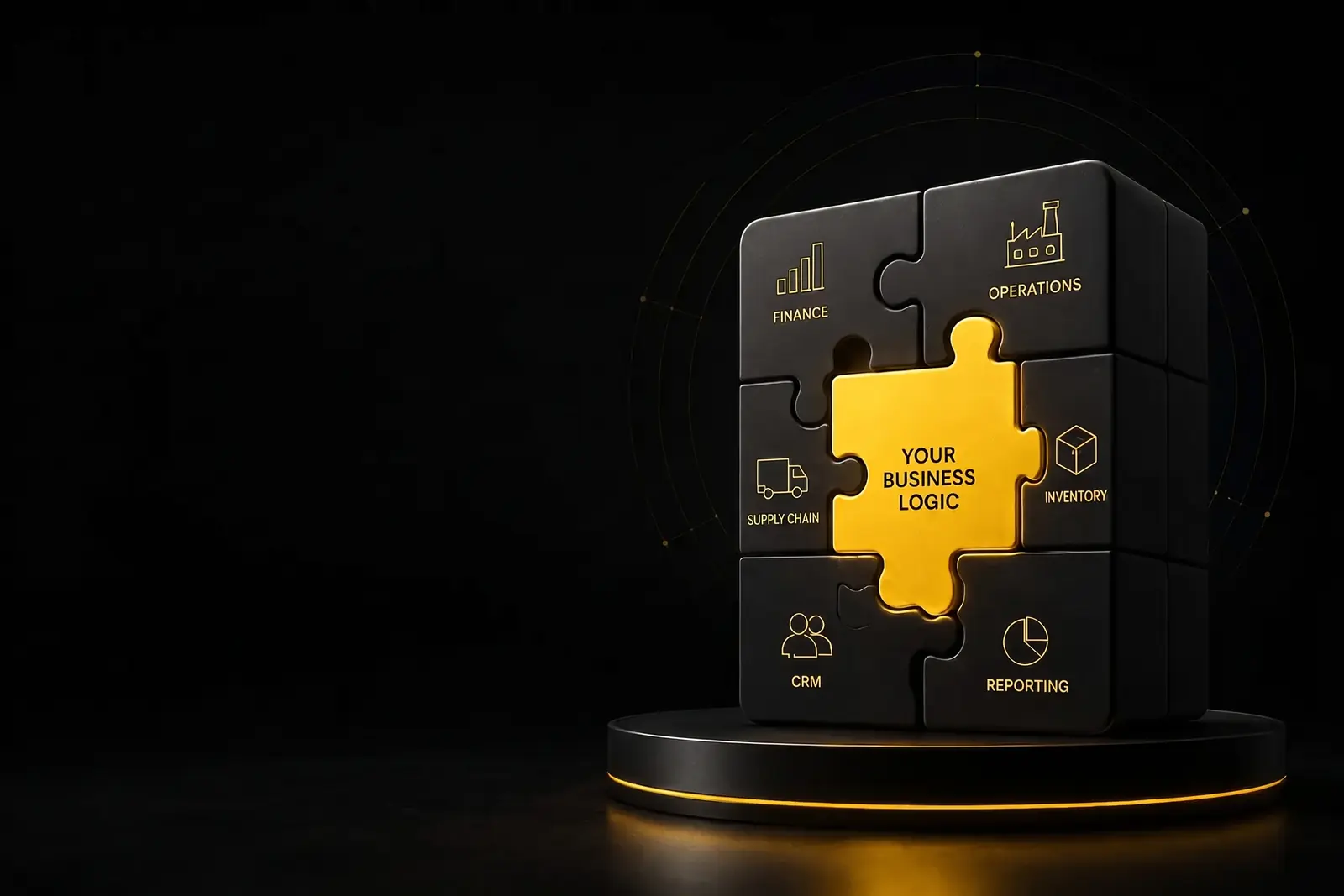
Replatforming (keeping the product logic while changing how it runs and connects) often sits inside a hybrid plan when APIs and data migration have to land in stages.
In business terms: build the new capability beside the old system until it can replace it. Each stage delivers value on its own, so capability shows up throughout the roadmap rather than only at the end of a long program.
Once those four paths are clear, the next question is how CEO, COO, CPO, and CMO priorities weight the same recommendation differently.
How the Trade-Offs Break Down by Executive Role
The profiles above name the paths. The table below shows how the same path looks different from each seat at the table.
| Path | CEO: Budget and Board | COO: Time to Capability | CPO: Operational Continuity | CMO: Time to Market |
|---|---|---|---|---|
| Rehost (move as-is) | Lower near-term operating costs; follow-on rework can be scheduled | Fastest to implement | Continuity preserved; leftover system problems remain for later phases | Limited campaign or marketing-technology acceleration; attribution and routing gaps carry forward |
| Refactor (improve what you have) | Moderate investment; clearer maintainability gains | Capability arrives in increments | Continuity improves through targeted fixes | Can ship one attribution, routing, or personalization capability without replacing the full marketing stack |
| Rebuild (replace it) | Highest upfront cost; lower long-term total cost potential | Longest path to matching everything the old system does today | Short-term change is higher; long-term operations are cleaner | Cleanest when marketing tools cannot support AI, automation, or new channels the growth plan requires |
| Hybrid (build beside) | Spend staged by module | Capabilities released in phases | Continuity protected by isolating changes | Phases in a campaign portal or lead routing beside the current CRM without stopping current campaigns |
Discovery is where those priorities get reconciled against what the system can actually support, including the metrics leadership will use to judge success.
When roles still disagree after that reconciliation, something still needs settling before you buy. That gap is not a reason to pick a path from a vendor deck. The checkpoints below name what must be true before that path choice becomes a signed buy.
Clarity Checkpoints Before You Commit
The matrix and role table help you compare options. Discovery and governance still have to catch what those views miss from the outside. The signals below are checks{3} before you sign, not reasons to delay the decision indefinitely.
Discovery Signals
- A complete list of the systems to be modernized is available
- Live tests have confirmed what depends on what, and those connections belong in the scope estimate
- Third-party system owners are in the loop
- Third-party contract terms and what those systems can connect to (API capabilities) are understood
- The structure and volume of data to be moved are documented, including any data migration risk that would change the path
- Automated tests (or a plan to add them) exist where acceptance will depend on repeatable proof
Governance Signals
- A named owner has authority to sign off on acceptance
- Reserved budget for expected changes is defined
- Critical connection points between systems have an internal sponsor
- Software modernization milestones name a scalable outcome, not only a hosting change
Extended discovery, third-party contract reviews, and short alignment sessions with the people who can say yes close any remaining gaps. Settling those points before you sign keeps the path, price, and timeline aligned.
unosquare‘s delivery model is built to produce that evidence in week one and lock the buy to the path it supports. The phases below show how each WEIGH point gets settled before the next dollar is funded.
How unosquare‘s Outcome-Based Model Puts WEIGH Into Practice
Once the checkpoints above are clear, each delivery phase settles part of the path decision before the next dollar is funded. Discovery produces the evidence. Architecture locks price to the path that evidence supports. Build verifies that path against the roadmap trigger. Handoff transfers a system your team can own.
Discovery, Week 1: Prove the Path From Evidence
The team maps systems in scope and documents how those systems connect{3}. It then runs live tests on data that behaves like production, aimed at the capability forcing the decision: the partner portal, the campaign attribution layer, the lead-routing workflow, or the channel leadership needs this quarter.
You leave with four discovery outputs. First, a working prototype of that capability. Second, a path recommendation (move as-is, refactor, rebuild, or hybrid) backed by findings from your actual system, including whether replatforming or rearchitecting is required for the APIs the roadmap depends on.
Third, a prioritized risk list with cost and timeline impact by path, covering data migration and containerization needs where they change the estimate. Fourth, a fixed-fee proposal scoped to the outcome discovery supports.
That settles Evidence and the first pass at What “Done” Means from WEIGH before anyone signs for full delivery.
Solution Architecture, Week 2: Lock Price to the Path You Chose
Scope, fixed fee, and acceptance criteria are written for the path discovery recommended, not for a vague modernization program.
“Done” names one shippable outcome tied to the business trigger: the module that unblocks the roadmap, the improved workflow that removes production drag, or the switchover stage leadership agreed to fund. Where the path depends on a CI/CD process (automated build and deploy), that operating model is named in the handoff terms so G in WEIGH stays concrete.
Change orders require executive approval and sit under a capped reserve for expected refinements. Payment ties to acceptance milestones on that path, not to hours billed.
Build, Weeks 3–11: Verify the Path Against the Trigger
Working software arrives on milestones leadership can track without translation: the customer-facing capability is live in a pre-production test setup, the operational workflow passes acceptance, or the connection point a hybrid path depended on is proven. Each gate confirms the path choice still matches what discovery found.
Progress reports describe business outcomes (capability ready, acceptance passed, revenue path protected), not engineering status updates that need a translator in the room.
Deploy and Handoff, Week 12: Switchover With Ownership Settled
Production rollout follows the staged plan from WEIGH Handoff and Switchover: named decision owners, clear pause conditions, monitoring during the switchover window. Source code, configuration settings, and operating documentation transfer at handoff. Your team runs and extends the system without calling unosquare back for daily operations.
Builds start at $100K, fixed fee, funded only after the path and scope are settled. If the build takes longer than scoped, that cost is unosquare‘s.
unosquare has completed 2,500+ projects across 16 years of engineering discipline, with a client NPS in the top 1% of B2B services. Deliveries are SOC 2 compliant and HIPAA-ready, with security testing (penetration testing) before acceptance where the engagement requires it. The fit questions below test whether that model matches the buy you are ready to fund.
Does unosquare‘s Fixed-Fee Model Fit Your Project?
After the phases settle WEIGH in practice, five questions help you see fit quickly.
Do you need production-ready capability within 8–12 weeks?
Tight timelines work best with tight scope. If the outcome can be defined clearly enough that both parties would agree on whether it was achieved, a fixed-fee model fits well. If the outcome still needs exploration, discovery is the right first step.
Do you require full code and operational asset ownership?
unosquare transfers complete source code, configuration settings, and documentation at handoff. For organizations serious about lasting business value, full ownership is a baseline. The contract states exactly what transfers and when.
Do you need budget certainty?
The fixed-fee model caps what the client pays. Scope changes need executive-approved change orders with explicit cost and timeline impact. If scope is still being defined, discovery is the right first step.
Do you have a board or PE deadline requiring clear deliverables?
External deadlines benefit from date-stamped discovery summaries, milestone schedules, and acceptance criteria tied to payment. Those materials support board and PE governance more effectively than traditional software project management progress reports.
Are cybersecurity and compliance requirements part of the build?
unosquare delivers SOC 2 compliant, security-tested software by default. Regulated industry requirements{4} are factored into the fixed-fee estimate during discovery, so they are part of the scoped outcome from the start.
If the path is still unclear, week-one discovery is the low-risk step that settles it before you fund delivery. The deliverables below show exactly what that week returns.
What to Expect from Week-One Discovery
When fit still depends on path clarity, week one is where you get the answer. It is not a sales demo. It is a fixed-scope prototype built to answer whether the path you are leaning toward survives contact with your system.
Deliverables include:
- Working screens with representative data your team can walk through
- A proof that key connections work, using inputs that behave like production
- Recommendation memo naming a path (move as-is, refactor, rebuild, or hybrid) and the software modernization rationale behind it
- Risk list with unresolved issues and cost estimates
- Explicit acceptance criteria procurement can convert into milestone language
When the prototype confirms the approach, the fixed-fee proposal follows with defensible scope, an evidence-backed timeline, and acceptance criteria already tested against real system constraints. If findings refine the recommendation, those findings ship as part of the same package. That is how modernization strategies stay tied to evidence instead of a default rewrite.
One Week. A Working Prototype. Then Decide.
See what week one produces: the scoped, fixed-fee proposal comes with the prototype. No commitment required beyond week one.
Frequently Asked Questions
Once week one returns a prototype and a path-matched proposal, the questions below usually decide whether the buy follows the recommendation.
How do I choose between rehost, refactor, rebuild, or rewrite?
Let discovery evidence guide the decision. Rebuild and rewrite point at the same idea: replace the system rather than keep patching it. Reengineering a subset of modules can sit between refactor and rebuild when only part of a legacy system is blocking the trigger.
You need three inputs to match your trigger to the right path: a complete list of what you have, a scored view of leftover problems in the current system, and live tests using real data.
How do we modernize legacy systems without committing to a multi-year program?
Scope tightly and deliver in phases{3}. A modernization roadmap divided into discrete, independently shippable phases delivers business value as you go, instead of waiting for a multi-year program to finish. That is still software modernization; it is just bought one outcome at a time.
unosquare matches path, fee, and acceptance criteria per phase, with each phase completed in 8–12 weeks. After each phase, you decide whether to proceed, adjust, or stop.
Is 8–12 weeks realistic for a project of our complexity?
Yes, for a well-scoped phase. Discovery maps your system’s actual complexity and produces a realistic scope recommendation. If the full objective requires more than one phase, it is broken into sequential deliverables, each sized to fit the 8–12 week window. No timeline commitment is made before the system is understood.
What happens if our requirements change mid-build on a fixed-fee project?
Changes go through an executive-approved change order process with explicit cost and timeline impact. A capped reserve for expected refinements is set at the start. Changes that exceed that reserve are escalated for executive signoff before work proceeds.
What do we actually get in week one during Discovery?
You receive a working prototype demonstrating core functionality with representative data. You also get a complete list of systems in scope, documented connection points, live test results, a prioritized risk list, and a recommendation memo. Together those support the go decision and fixed-fee contract scope before you fund delivery.
If your modernize or rebuild decision still depends on which path fits the trigger, unosquare‘s outcome-based delivery gives you a practical next step. Week one returns a scoped prototype and a fixed-fee proposal matched to that path. WEIGH settles what “done” means before you fund delivery, with full code ownership at handoff. Request the free prototype and choose the path from evidence on your actual system: move as-is, refactor, rebuild, or hybrid.
References
- Amazon Web Services. (n.d.). About the migration strategies. AWS Documentation.
https://docs.aws.amazon.com/prescriptive-guidance/latest/large-migration-guide/migration-strategies.html - Amazon Web Services. (n.d.). AWS application design and migration strategy. AWS Documentation.
https://docs.aws.amazon.com/prescriptive-guidance/latest/application-portfolio-assessment-guide/aws-application-design-and-migration-strategy.html - Google Cloud. (n.d.). About migration planning. Google Cloud Documentation.
https://cloud.google.com/migration-center/docs/migration-planning-overview - National Institute of Standards and Technology. (2026). Secure Software Development Framework SSDF. NIST CSRC.
https://csrc.nist.gov/Projects/SSDF

Oscar Rank
Head of Marketing
Oscar Rank is the Head of Marketing at unosquare. He arrived there after a 15-plus year career spanning financial services, retail and technology. His path ran through product management, strategy, data and CRM roles before he made the jump into full-funnel marketing and GTM. He holds a degree in industrial engineering from the University of Toronto, with a specialization in human factors. That systems-first, human-centered mindset shows up in how he runs marketing: build the process, then let the data settle the argument. He writes about how software and AI are changing what’s possible for a business, and how that shifts the trade-offs leaders have to make.