Leadership approved the claims-intake workflow after a controlled run: submissions read with natural language processing, missing fields flagged, routing recommendations drafted with generative AI. The board presentation landed. The use case is chosen.
That approval ends selection and starts implementation. The open work is turning the approved workflow into software your operators run under real volume.
Which systems and APIs must the intake path connect to? What accuracy and escalation standards count as pass or fail at each milestone? What proof must exist before handoff? When does outside build involvement end?
Those are implementation questions. Write the answers before anyone commits build budget.
Price, scope, and acceptance criteria belong in one conversation before you commission the build. Settle them together and you get a delivery sequence with a finish line your sponsor can sign.
The Claims-Intake Demo Is the Starting Brief
Those written answers start here: treat the approved claims-intake run as a brief, not a finished system.
AI tools made proofs of concept fast. A convincing working version can appear in days, and that speed helps when you are still choosing what to build. Speed alone does not finish the build the board already approved.
Once the use case is chosen, the question shifts. It is no longer “does this workflow work in a controlled run?” It is “can we deliver it as owned software under real volume?”
You are commissioning a build with agreed milestones and proof that each gate passed. Handoff leaves a named owner on your side running a live system, with the production controls{1} that belong in the sign-off package.
Before unosquare writes production code, the build answers are written down:
- Which use case (or proof of concept) is in scope, and which are out?
- What measurable standards count as pass or fail at each milestone?
- Which data flows, data pipelines, and systems must the build connect?
- What proof package must exist before handoff?
- When does outside build involvement end?
Write those answers into the engagement. Ownership transfer becomes part of delivery, not a late scramble after the demo has already been treated as “done.”
Claims intake is the example this article follows most closely. A lead-scoring or campaign-routing demo your growth team already validated runs on the same path: an approved workflow, systems to connect, and acceptance proof your operators can open at handoff.
The next question is whether that path stays predictable once build budget is on the table.
What Makes the Claims-Intake Build Predictable
With the demo as a brief, not a finish line, enterprise AI projects reach production when both sides are paid and measured for the same deliverable: a system your team can run without the builders in the room.
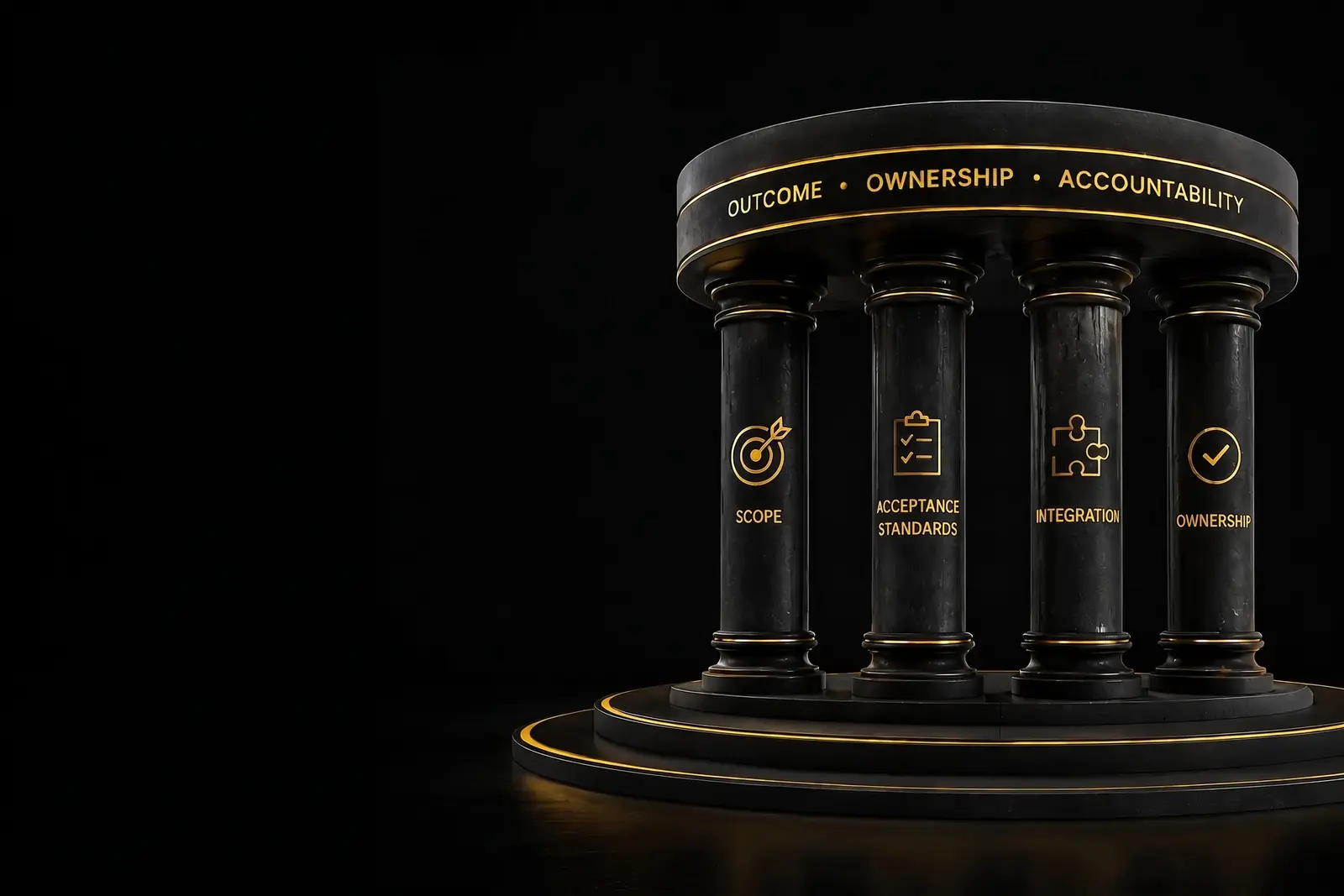
An enterprise AI strategy becomes an implementation plan when four things are on paper for the chosen workflow: routing quality gates, system handoffs, acceptance proof, and a handoff date.
For claims intake, that means naming which submission types are in scope, which systems receive routed cases, and what pass or fail proof exists at each milestone.
unosquare locks that map and a fixed fee in week two, after its week-one Discovery prototype runs the intake path against your submission samples and shows what must connect, including the APIs and data infrastructure the owned system will need.
Most projects move from Discovery through production deployment in 8–12 weeks, with full code ownership at handoff. Those pre-build commitments are what SAFE checks.
SAFE: Four Checks That Define Real Delivery
unosquare writes four delivery checks into the engagement before the build is commissioned. Those checks keep the claims-intake path aimed at an owned production system, not an extended demo.
| Letter | Checkpoint | What gets settled |
|---|---|---|
| S | Scope and acceptance | Measurable “done” for the selected use case at each milestone |
| A | Agreement on price | Fixed fee tied to acceptance proof; change orders capped |
| F | Final handoff | Code ownership, operator docs, training, and support that steps down as your team proves ready |
| E | Evidence of production readiness | Proof the system is healthy, handles real volume, and is auditable |
For claims intake, each letter maps to a step from submission to adjuster queue. Start with scope and acceptance. Everything else in the engagement points back to what “done” means for that intake path.
S: Scope and Acceptance
“Done” for claims intake means four things in writing. Name which submission types are in scope. Name how accurately missing fields must be caught. Name when a case escalates to a person. Name what routing quality operations will accept under real volume, not a controlled demo.
| Milestone element | What the contract names |
|---|---|
| Included capabilities | What the build delivers at each gate |
| Explicit exclusions | What stays out until a later phase |
| Completion criteria | Measurable pass or fail tests |
| Test data | Representative samples for acceptance |
| Acceptance tests | Objective sign-off triggers, not status slides |
Payments follow signed acceptance documents. For AI agents, agentic AI, and automated workflows, accepted behavior covers the full path: what goes in, what comes out, how decisions are made, when a person steps in, and what happens when something goes wrong{2}.
System connections and APIs belong in scope with their own acceptance criteria. unosquare settles scope at the end of week two, before build begins.
Once submission types, accuracy thresholds, and routing gates are named, price can lock to the same map.
A: Agreement on Price
Once that intake map is named, price locks to it. The fee stays fixed against those validated milestones. Payments follow acceptance proof, not elapsed time.
Scope, schedule, or cost changes need documented executive approval before work shifts. If the build takes longer than agreed, that is unosquare‘s cost, not yours.
For claims intake, the fixed fee covers the routing gates, system handoffs, and acceptance proof the scope map names, after the intake path is validated against real submission samples. unosquare settles scope and price together before build budget is committed.
Execute the Build Only After the Intake Path Is Mapped
Routing quality gates, system handoffs, and acceptance proof belong in writing before build budget is committed.
unosquare‘s one-week Discovery phase runs the intake path against your submission samples and delivers a proceed-or-pause packet. No commitment required.
Scope and price lock in week two, once you have seen what the owned system will require. With those locked, the next SAFE check is who runs the system after the build.
F: Final Handoff
Scope and price define what gets built for the intake path. Handoff defines who runs it after that build is complete. Plan that change management at contract signing, not in the final week.
| Handoff element | What transfers |
|---|---|
| Code ownership | Full ownership of the code (or held by a neutral party until transfer); no outside dependency |
| Connection docs | How the system connects to existing tools |
| Operator guides | Step-by-step paths your team can follow alone |
| Training | Recorded sessions and named escalation paths |
| Support step-down | Staged decrease as your team hits readiness checks |
For claims intake, handoff means intake supervisors and adjusters can route, escalate, and recover without calling the vendor. unosquare delivers the complete handoff package at week twelve, with operator guides and connection documentation for every system the intake path touches.
Evidence defines whether those operators can trust the system under real volume.
E: Evidence of Production Readiness
Handoff names who runs claims intake. Evidence is the proof package those operators and counsel open at handoff. It answers what happened under real volume, and it is not a slide.
Executive sponsors should be able to confirm three things: system health in monitoring and alerts, real volume under the conditions operations actually face, and decision records plus compliance documentation when counsel or audit asks.
The partner builds the underlying controls. The contract names the business proof at each milestone. For AI agents and automated workflows, reliability under unusual conditions and steady performance over time belong in the sign-off package.
unosquare writes compliance proof into the build plan before commission. That covers AI ethics, risk management for higher-stakes routing decisions, privacy rules such as GDPR{3}, the EU AI Act{4} (European rules for higher-risk AI), and sector obligations. Security testing, SOC 2 compliant systems (an independent security audit standard), and systems designed for real load are part of delivery, not a post-launch project.
For claims intake, that proof package includes routing decision records, queue health monitoring, and a record of what happened and when. Your compliance team can open it when a submission path is questioned.
With all four SAFE checks in the contract, the next job is seeing how those checks land phase by phase on the claims-intake path.
How unosquare Delivers These Commitments
unosquare builds all four SAFE checks into the contract before build work begins. Milestones have defined acceptance criteria. Payments have documented triggers. Handoff transfers operational ownership on a fixed schedule.
Procurement, legal, and delivery sponsors do not invent these standards after the fact. The four delivery phases below move the claims-intake path from validated brief to owned handoff.
Discovery: Validate the Selected Use Case Before You Build
Week 1
Discovery is where the approved claims-intake demo becomes a brief you can build from. In week one, unosquare runs the intake path leadership already approved against real submission samples, not a rehearsed demo script.
The prototype reads incoming claims with large language models where document understanding helps, flags missing fields, and drafts routing recommendations the way your operations team described the problem. That run answers a practical question: can this workflow become an owned production system on your data, with the handoffs your acceptance criteria will require?
Discovery maps the intake path end to end in business terms your sponsor can sign:
- Which submission types the build will handle, and which stay out of scope for now
- Whether field completeness and data quality are strong enough to trust routing decisions
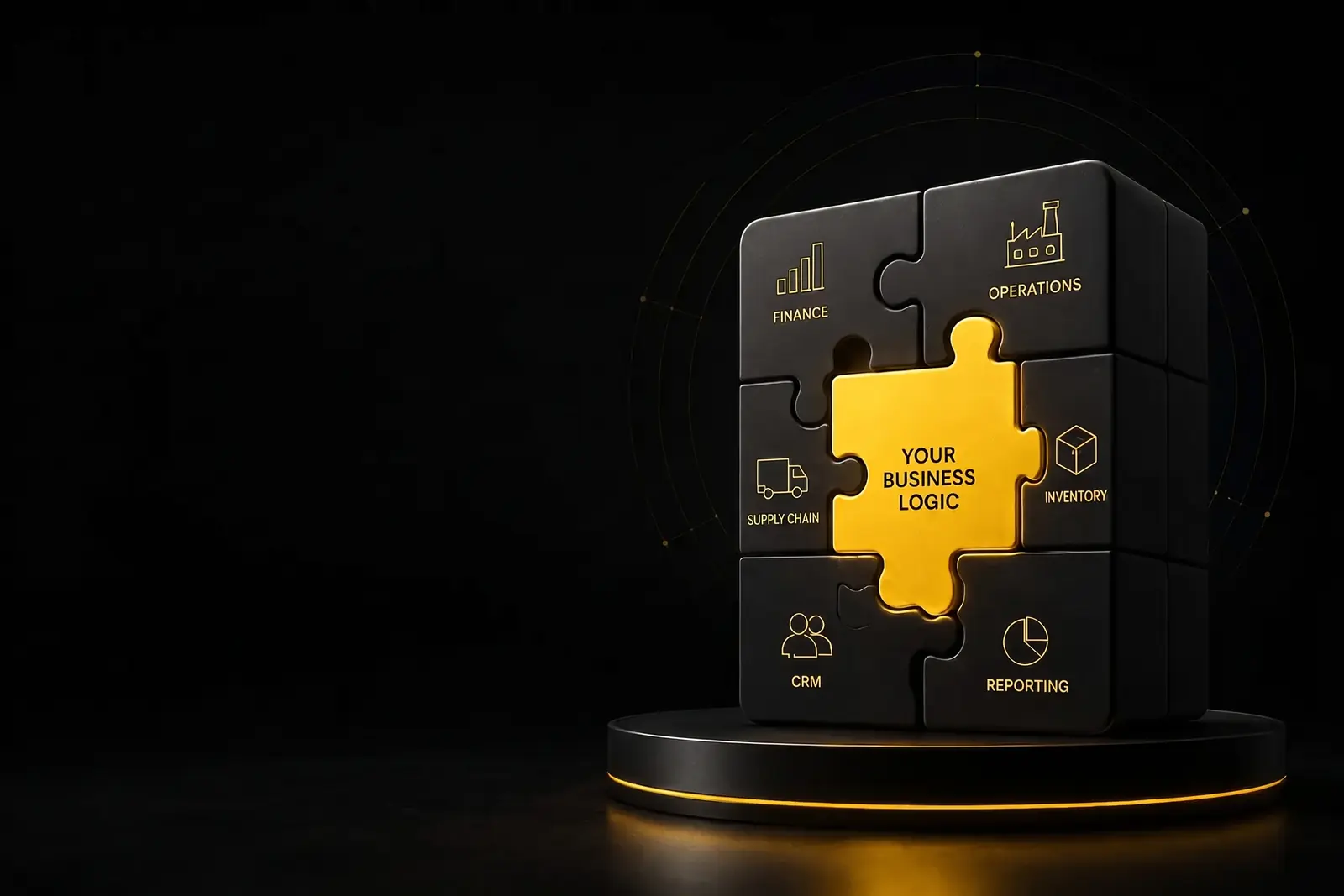
- Which systems must receive a routed case without manual re-entry (policy system, document store, adjuster queue), and which APIs those handoffs use
- What privacy, retention, audit, and data governance expectations shape the proof package before handoff
For AI intake workflows, this week confirms whether you have enough past examples and escalation history to lock a fixed fee, or whether cleanup must finish first. Generative AI and LLM-assisted drafting only help when data quality is good enough for operators to trust the recommendation. Large language models do not replace data governance or clean submission history.
The output is a proceed-or-pause packet: continue on a scoped build path, or name what must be resolved so scope and price can settle cleanly in week two. Discovery requires no commitment. What Discovery validates, Solution Architecture prices.
Solution Architecture: Settle Price Before You Commission the Build
Week 2
Week two converts Discovery findings into a signed scope map and fixed fee for the claims-intake system your team will run. Acceptance gates are written in operations language, not platform jargon:
- Missing-field detection accuracy and routing recommendation quality at each milestone
- Escalation triggers when the system is not confident enough for operations to trust the recommendation
- Pass or fail tests for every handoff from intake to review queue to adjuster workspace
- Named owners, operating roles, and expected run cost once outside build involvement ends
- KPIs operations will watch after handoff (time to first routing decision, escalation rate, rework from incomplete submissions)
Price locks to that map. Enterprise AI platform choices follow what the intake path requires, not a preferred stack. Buying an enterprise AI platform does not remove the need for scoped acceptance on your intake workflow.
Time to first routing decision, escalation rate, and rework from incomplete submissions connect directly to milestone payments, so progress cannot rest on a status slide that still looks like the demo. Nothing starts until that scope and price package is written, reviewed, and agreed together. With those locked, Build executes against the intake map week by week.
Build: Fixed-Fee Delivery with Visible Progress
Weeks 3–11
Build advances in short cycles against the intake scope map signed in week two. Each increment is judged on claims workflow outcomes: fewer incomplete submissions reaching adjusters, routing decisions that match the rules operations defined, escalation paths that reach a human when they should, and measurable operational efficiency for the intake team.
Representative submission batches, including messy unusual cases and what happens when something goes wrong{2}, run through the full path before milestone sign-off. Connections are tested for clean handoffs across systems, not just whether a connection appears to work.
Where agentic AI handles multi-step routing, practice runs that look like production happen before the final gate, so week twelve is confirmation, not the first time real load hits the system.
Weekly executive updates and signed acceptance records give one shared history of what was delivered, reviewed, and accepted. Payments follow those records.
The build phase ends when the intake system meets the exact criteria agreed before you commissioned the build. Deploy and Handoff then transfers ownership to the team that will run it.
Deploy and Handoff: Ownership Transfer
Week 12
Week twelve completes a handoff plan that started at contract signing, not a last-minute training sprint. Claims supervisors and intake operators walk through the live system with step-by-step guides, shadow the first production runs, and confirm they can route, escalate, and recover without calling the vendor.
The handoff package for an owned intake system includes:
- Operator guides for daily intake review, escalation, and exception handling
- Monitoring views that show queue health, error rates, and how long routing takes
- Connection documentation in plain language for each system the intake path touches
- Decision records and a record of what happened and when your compliance team can open on request
- Named escalation paths and a support step-down with readiness checks
Outside build involvement decreases on the schedule defined in week two. Final sign-off confirms your named owners can run claims intake under real volume on the date both sides agreed before build began.
The claims-intake path is the reference model. Other approved workflows follow the same SAFE sequence once the use case is selected.
How the Claims-Intake Path Scales to Other Selected Use Cases
unosquare runs most projects from Discovery through production deployment in 8–12 weeks. Where a selected use case lands in that window depends on how many systems must connect, how ready the data is, and which regulatory requirements shape the sign-off package.
Claims intake is the reference path here. Growth leaders commissioning marketing AI face the same commissioning questions on a different workflow.
Leadership approved a lead-scoring, campaign-routing, or generative AI personalization proof of concept. The workflow is chosen. Procurement still needs three answers on paper: which customer and marketing automation systems the path must connect to, what scoring accuracy and escalation thresholds count as pass or fail at each milestone, and what proof the marketing team can open before they run the system under real campaign volume.
Fraud detection, triage routing, predictive analytics for demand forecasting, and predictive maintenance follow the same SAFE sequence. Only the workflow details change. Resource allocation still starts with a selected use case and a Discovery packet before build budget is committed.
Those paths assume defined acceptance criteria, representative data access, and executive sponsorship before build starts. Axos Bank, a financial services client{5}, reached 105,000+ monthly active users and 99.9% uptime{6}.
unosquare has completed 2,500+ projects across 16 years, with a client NPS in the top 1% of B2B services, and brings production AI, cloud, and data engineering experience{7} to each engagement.
If the claims-intake path (or your growth team’s approved demo) matches your situation, the question is timing, not model fit. The fit check below tells you whether to execute now or start with Discovery.
Is a Fixed-Fee Outcome Build Right for Your Situation?
Commission the build when three things are true: the use case (or approved demo) is already selected, the data is usable for build validation, and an executive sponsor can sign milestones and handoff. With those in place, you are deciding when to execute, not whether the model fits.
For claims intake, that means submission samples are available, data quality is strong enough to write pass or fail criteria, routing standards are defined, and a named sponsor can approve milestone sign-offs.
For growth workflows, the same prerequisites apply against campaign data and marketing-tool connections.
The model also fits when you have a delivery deadline this quarter or next, pilot projects ready for production, a compliance date that requires an owned system, a competitor already shipping a capability you lack, an internal build ready for an outcome-based path, or a digital transformation initiative that needs a defined capability executed to handoff.
Start with Discovery instead when success metrics are still open-ended, scope is rolling with no fixed deliverable, or the selected use case still needs definition before you commission the build. Discovery is a one-week experiment that surfaces what “done” should mean before any build budget is committed.
| Prerequisite | Why It Matters |
|---|---|
| Named executive sponsor with milestone approval authority | Keeps sign-offs on time and based on acceptance proof |
| Product owner assigned for knowledge transfer at handoff | Keeps ownership transfer grounded in how the system will be run |
| Representative sample data with personal details removed | Enables acceptance testing before price is agreed |
| Defined success metrics for the selected use case | Makes acceptance criteria point back to business outcomes |
| Budget authority confirmed; builds start at $100K | Keeps authorization aligned with the agreed build plan |
The executive sponsor approves acceptance at each milestone. The product owner manages day-to-day alignment during the build. unosquare owns the build schedule.
Clarifying these roles before work begins keeps milestone approvals evidence-based from demo through handoff.
When the prerequisites are in place, the lowest-risk next step is a week-one prototype on your selected use case, not another proposal deck.
Start With a Prototype, Not a Proposal
Most executives spend weeks evaluating partners before seeing anything real on the selected use case.
unosquare‘s week-one prototype gives you a working version of that use case against your data, before any scope or price is committed. No commitment required.
You decide whether to execute the build with evidence in front of you, not on the strength of a deck.
For claims intake, that prototype runs your submission samples through the approved workflow and surfaces the connections and acceptance needs the production build requires. The same week-one run applies whether your selected use case is intake routing, lead scoring, or campaign automation.
The questions below cover how that prototype becomes a scoped, owned system once you move.
Frequently Asked Questions
How do we move from an AI pilot to production software?
Moving from a pilot or approved demo to production is an implementation problem: definitions, milestones, and handoff. A pilot proves the concept. Production is an owned system.
Delivery rests on agreed acceptance criteria, proof that the system is healthy and handles real volume, support processes, and a planned ownership transfer.
For claims intake, that transition means naming which submission types the build handles, which systems receive routed cases, and what routing accuracy and escalation thresholds count as pass or fail at each milestone. Start by defining what production means in build terms:
- Who runs intake after handoff?
- What routing performance is acceptable at each milestone?
- What risks must be covered in the sign-off package?
- What systems and data pipelines must connect in scope?
- What does the handoff timeline look like?
unosquare‘s Discovery phase is built for this transition. In week one, the prototype checks whether the pilot project’s assumptions hold under real submission samples and surfaces the connection and acceptance needs the production build requires.
Where LLMs read unstructured submissions, that check includes whether operators can trust the extracted fields. The result is a clear proceed-or-pause decision with a scoped, priced path when the evidence supports executing the build.
What does “definition of done” look like before we sign?
“Done” is written into the contract before anyone builds. The contract names what will be delivered (scope map, included capabilities, exclusions, and completion criteria), how delivery will be verified (acceptance tests against representative data), and who approves each milestone (a named executive with authority).
For claims intake, “done” at each gate means measurable routing outcomes: missing-field detection accuracy, escalation triggers, pass or fail tests for every handoff from intake to adjuster queue, and evidence your compliance team can open on request. If an LLM drafts a routing recommendation, the acceptance criteria still name when a person must review it.
unosquare completes the scope map and acceptance criteria during week two, before build begins. If you can read those criteria before signing and they describe a system your team will run after handoff, they are clear enough to build against.
Is 8–12 weeks realistic for a project of our complexity?
For a selected use case with representative data available and an executive sponsor in place, yes. The 8–12 week window covers Discovery through production deployment and handoff. Complexity affects where a project lands within that window, not whether the execution model applies.
For claims intake, complexity usually shows up in how many systems must connect (policy system, document store, adjuster queue), data readiness across submission types, and regulatory requirements that shape the sign-off package. Discovery surfaces those factors before the fixed fee is agreed. If the prototype shows that data readiness, connections, or regulatory needs require adjustment, those findings are documented and priced before build starts.
What contract language keeps a fixed-fee project aligned to verified delivery?
unosquare ties milestone payments to signed acceptance outputs only. Executive sign-off is required before any scope, schedule, or cost change is made. Change orders are capped so fee adjustments stay intentional and documented.
For claims intake, that means payments follow signed acceptance records on routing accuracy, system handoffs, and production readiness proof, not elapsed time or status slides. Those controls are built into the engagement before build begins.
When should we commission custom AI agents instead of buying off-the-shelf tools?
Commission custom AI agents when your selected workflow, data, or competitive edge makes a generic tool a poor fit for the build you need to own. If an off-the-shelf tool forces heavy process workarounds, the total cost of those workarounds, licensing, and operational compromise may exceed the cost of a custom build.
Buy off-the-shelf when the use case is generic, your data needs are standard, and the partner’s roadmap lines up with your near-term plans. Ask whether the tool fits your business, or whether your business would need to fit the tool.
Claims intake with proprietary routing rules, sector-specific compliance, and connections to older policy systems usually falls on the custom side. Generic lead capture with standard customer-record fields often does not. An LLM wrapper around a generic tool is still a tool choice, not an owned intake system.
If your AI mandate needs to move from approved demo to production system, unosquare turns the selected use case into a scoped prototype, fixed-fee build, and owned handoff before the full build budget is committed. Validate the workflow against your data first, then decide with evidence in front of you.
References
- NIST. (n.d.). AI Risk Management Framework. NIST.
https://www.nist.gov/itl/ai-risk-management-framework - Microsoft. (2022). Microsoft Responsible AI Standard, v2 general requirements. Microsoft.
https://cdn-dynmedia-1.microsoft.com/is/content/microsoftcorp/microsoft/final/en-us/microsoft-brand/documents/Microsoft-Responsible-AI-Standard-General-Requirements.pdf - European Commission. (n.d.). Legal framework of EU data protection. European Commission.
https://commission.europa.eu/law/law-topic/data-protection/data-protection-eu_en - European Commission. (2026). AI Act. Shaping Europe’s Digital Future.
https://digital-strategy.ec.europa.eu/en/policies/regulatory-framework-ai - unosquare. (2025). Full Development of the Consumer Online Banking Application (Web & Mobile). unosquare.
https://www.unosquare.com/case-study/full-development-of-the-consumer-online-banking-application-web-mobile/ - unosquare. (2025). Full-Scale IT Ops and Security Support for Banking Growth. unosquare.
https://www.unosquare.com/case-study/full-scale-it-ops-and-security-support-for-banking-growth/ - unosquare. (n.d.). Custom Software Development Services. unosquare.
https://www.unosquare.com/
Unosquare Staff
Engineering & Design Team
The Unosquare team brings together engineers, designers, and strategists with decades of experience building software across industries. We write about nearshore development, digital transformation, and the craft of shipping great products.