
The board approved an artificial intelligence center of excellence in Q1. Six months later, the review calendar is full, three AI initiatives have framework decks, and the standards workshop has a waiting list.
Operations still runs the same manual workarounds. Marketing’s lead-routing pilot sits in a test environment while the CoE schedules another governance session.
That is charter theater: busy, funded, and still not shipping. What is missing is not sponsorship or another standards workshop. It is an AI CoE that puts production systems in your team’s hands.
At handoff, code and IP sit in accounts you control, and data management stays with your team. An operations team can run each system without calling the CoE for every change.
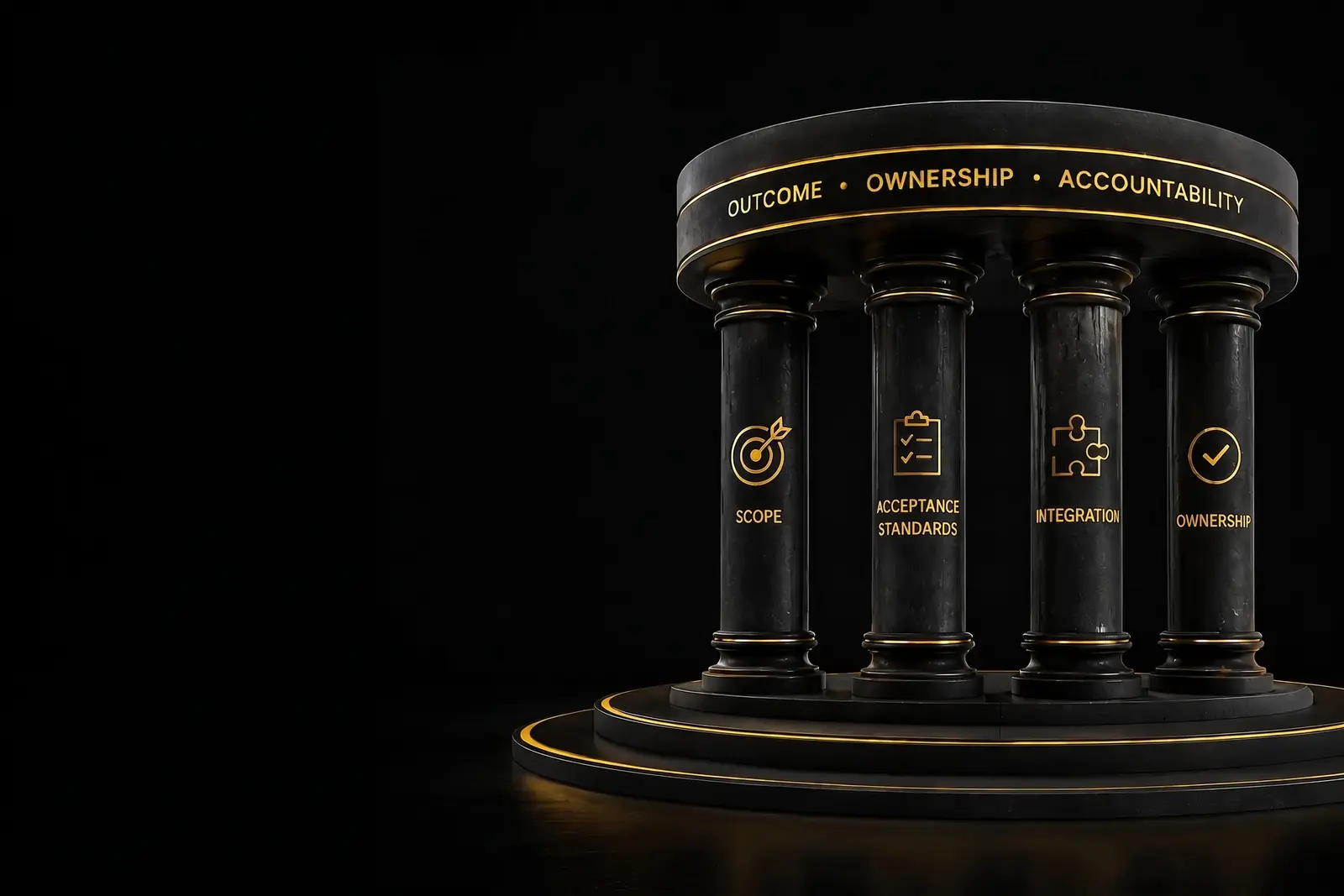
A CoE built to ship puts a production system in your hands in 8–12 weeks and leaves playbooks so the next build is faster. That is why the buying question is not “do we have a CoE charter?” It is whether each build lands on a fixed schedule and budget with ownership your team can keep.
How Can You Get a Production-Ready AI CoE on a Fixed Schedule and Budget?
What still has not arrived is the thing you are actually buying: a system your team owns and can run, with a clear path to the next one.
That path starts when the CoE stops treating advice as the deliverable. Each AI implementation locks scope, price, and what “done” means before a line of code is written.
Leadership gets dates it can put in the budget plan. Your team gets systems it can operate without calling the delivery partner every time something changes. Once each build runs that way, the board can fund the next artificial intelligence system from a single page that shows timeline, fee, and ownership.
What Does the Board Really Need to Know? Outcomes, Timelines, and Investment
Timeline, fee, and ownership only become fundable when they sit on one page before build. Every row is something you can check in Discovery, during the build, and at handoff.
| Factor | What to Expect |
|---|---|
| Timeline | 8–12 weeks from kickoff to production handoff |
| Investment | Fixed-fee builds starting at $100K, scoped before development begins |
| Ownership | Full code, data, and IP transfer at handoff |
| What Gets Settled | Scope, fee, what “done” means, and handoff readiness before build |
| Week 1 | Working prototype against your real data and systems, with no commitment required |
| Acceptance | Named owners, clear roles, and payments tied to shipping milestones |
Those numbers only hold when delivery stays predictable build after build. That is why the next question is what makes a shipping CoE repeatable instead of another review calendar.
When CoE Delivery Stays Predictable
The timeline, fee, and ownership on that page stay true only when the second and third builds behave the same way as the first. You see that predictability in week one of Discovery, not on a polished contract cover page.
Discovery that produces working software. Week one ends with a prototype your ops team can touch. It also names the pass/fail checks for the full build. Those checks are simple yes/no tests both sides can run.
You are not evaluating slide architecture. You are evaluating whether ops can run the system they would receive at handoff.
A path from proof of concept to production. Handoff transfers a running system, not a polished demo with a long to-do list attached.
Ownership written into the engagement. Code lives in accounts your organization controls. Connections to your data use credentials your team owns. Handoff documents the transfer of code, data, and day-to-day control.
Knowledge transfer on the schedule, not after it. Operational documentation, overlap days with your ops owner and data scientists, and written guides are line items in delivery, not promises for later.
Those four traits appear when price, scope, and “done” are locked together before build. That is the problem most fixed-fee engagements skip: the fee gets locked while “done” stays undefined until week ten.
Why Price, Scope, and “Done” Belong in One Conversation
A fixed fee caps what you spend. It does not define what “done” means when the board, ops, and the delivery partner still disagree in week ten.
“Done” is not one vague milestone. The system runs in production. Your team can operate it. Ownership of the code and data has transferred. A documented warranty period has begun.
Agree on that definition in Discovery so each CoE build is something both sides can verify before the next one starts. unosquare locks price, scope, and that definition together before build begins for that reason.
Five points keep that definition from drifting build to build. GRASP names them.
GRASP: What to Settle Before Each CoE Build
Once “done” is one sentence both sides can verify, five points hold every CoE build to that same standard.
| Letter | Business meaning | What shows up in the deal |
|---|---|---|
| G | Gated scope and fees. Every deliverable has a clear pass/fail check. Payments release when those checks pass, not just when a calendar date arrives. A written change process with cost caps keeps scope shifts intentional. | Named deliverables, payments tied to acceptance, a change process, and scope/fee/”done” settled before build |
| R | Runs in production. The system goes live on AI infrastructure your team already uses, including your cloud platforms, with monitoring and alerts{1} they can use, not a partner test environment. If your team can put it live and watch it within 48 hours of handoff, it clears the bar. | Live in production, monitoring from day one, capacity ready for real use, and written service commitments after acceptance |
| A | Asset ownership. Your organization controls code, machine learning models, and data from day one, with explicit IP assignment if the engagement ends early. | Client-owned code from day one, explicit IP assignment, full transfer at handoff, clear early-exit terms |
| S | Skills transfer that lasts. Your team builds AI skills and AI literacy to operate the system for 30 days with confidence after handoff, supported by overlap days and checks that prove the system still behaves as agreed{2}. | Recorded playbooks, overlap days in the schedule, operational guides, knowledge transfer built into delivery |
| P | Protected exit. After acceptance, warranty and continuity stay clear. Remaining commitments release based on acceptance and service performance. | Scope/fee/acceptance settled before build, handoff terms before kickoff, continuity terms if the relationship ends early, written exit plan agreed before kickoff |
When those five hold (G through P), an AI CoE can ship cleanly and repeatedly.
The org chart only decides where standards live. GRASP decides whether any of it reaches production.
Stop Adding Review Meetings. See an Owned System in Week One.
If the CoE is board-approved and operations still runs the same workarounds, another standards workshop will not close that gap. In week one, a working prototype against your first use case shows whether the next build can ship into your team’s hands, before you fund the full CoE program.
Org Chart vs. Delivery Model
Whether your operating models put the CoE as centralized, federated, or hybrid only decides where standards live. Write the five GRASP commitments into every build before work starts, or AI adoption stalls under another review calendar regardless of which box you drew on the org chart.
If that distinction sounds familiar, you are probably living the gap between what leadership approved and what operations still runs manually.
Example: Board Wants a CoE; Ops Needs Systems That Keep Shipping
If the org-chart-versus-delivery gap sounds like your shop, here is how it usually shows up. When the board asks for an AI Center of Excellence, the COO hears a production date leadership can put in the next budget cycle.
The CMO hears the same mandate as a campaign problem: lead routing still sends half the volume to manual review, personalization never cleared live traffic, and generative AI content workflows stall at “pending CoE review.”
Writing GRASP into each build turns that board mandate into work the board can fund and ops can run.
Marketing is still waiting on lead routing. The week-by-week plan shows how that stuck lead-routing work becomes one of the first high-value use cases to ship as an owned system, tied to business goals instead of another review cycle.
How the Delivery Plan Creates Clarity at Every Phase
Lead routing is still sitting in a test environment while the CoE schedules another review. That stuck state is what the phases below are built to clear.
Discovery, Week 1: Validate Before You Commit
Week one ends with a working build against your CRM and real lead data, not a charter deck. You see which leads still route to manual review, and whether data quality is strong enough for production.
You also see the acceptance checks ops will run at handoff. That is the first CoE build shown in production terms, before you fund the full engagement.
Solution Architecture, Week 2: Lock Price, Scope, and Acceptance
The signed Statement of Work locks one owned system with a named production date. It names the deliverables. It names the pass/fail acceptance checks. It sets a fixed fee before development begins.
That Statement of Work becomes the template the CoE repeats on the next use case. If unosquare underestimates the build, that is unosquare‘s cost, not yours.
Build, Weeks 3–11: Acceptance at Every Milestone
Each milestone ships working software plus the reusable materials that make the next CoE build cheaper. That includes operational playbooks, acceptance checks, and handoff materials your ops owner reviews as they arrive. Readiness is verified at each gate, not saved for a final demo.
Deploy and Handoff, Week 12: Transfer Control
The system goes live in your production environment. Source code and documentation transfer to your accounts. Overlap days start immediately.
Your ops owner runs the first CoE-delivered system while support is still available. A warranty period begins. The CoE leaves with a proven build it can replicate on the next mandate.
What you receive at handoff:
| Deliverable | Purpose |
|---|---|
| Source code in accounts you control | Full ownership and room to extend later |
| Automated checks that prove the system still works as agreed | Proof both sides can verify without a debate |
| Monitoring dashboards | Operational visibility from day one |
| Operational guides | Step-by-step recovery instructions for your team |
| Recorded playbooks | Onboarding and knowledge transfer |
| Escrow and IP transfer documents (when used) | Contract continuity and clear ownership if the relationship ends |
That schedule only works when roles and acceptance authority are named before the Statement of Work is signed. Once the phases are clear, name who can accept so payments and scope changes have an owner.
Who Owns What: Roles and Approval Paths
A week-by-week plan still stalls if acceptance authority stays in committee. Map these business roles to real people before the Statement of Work is signed.
| Role | Primary Responsibility | Acceptance Authority |
|---|---|---|
| Executive Sponsor | Strategic alignment and funding | Final acceptance of CoE outcomes |
| Ops Owner | Day-to-day operation after handoff | Operational readiness sign-off |
| Compliance Sign-off | Regulatory and privacy approvals | Compliance deliverable approval |
The delivery partner documents that the system is ready to go live. You name the internal ops owner who will run it after handoff, and you keep project managers and AI engineers in the acceptance path so handoff is not a surprise.
Once these roles are mapped to real people, milestone payments have a clear release path and scope changes have a named owner.
With roles set, leadership still needs proof the CoE shipped instead of advised. That is what the metrics below are for.
KPIs and ROI Metrics for a Shipping CoE
Named owners make acceptance real. Named key performance indicators (KPIs) make the next budget conversation real. Track the metrics that prove the CoE ships business value{3} repeatedly, so AI investments stay tied to shipped systems:
| Metric | What It Measures |
|---|---|
| Systems shipped per quarter | How many owned production systems your team received and can run |
| Mandate-to-handoff time | Speed from board directive to working system |
| Manual hours eliminated per quarter | Automation impact on operations |
| Budget vs. fixed fee | Cost certainty against the committed outcome |
Start tracking those KPIs from the first 90 days and present results against the original business case. Those quarter-level numbers get stronger when materials from each build carry into the next one.
How Reusable Assets Grow CoE Value Over Time
Systems shipped per quarter matter more when the fifth build costs less than the first. That drop happens when materials carry forward{4}.
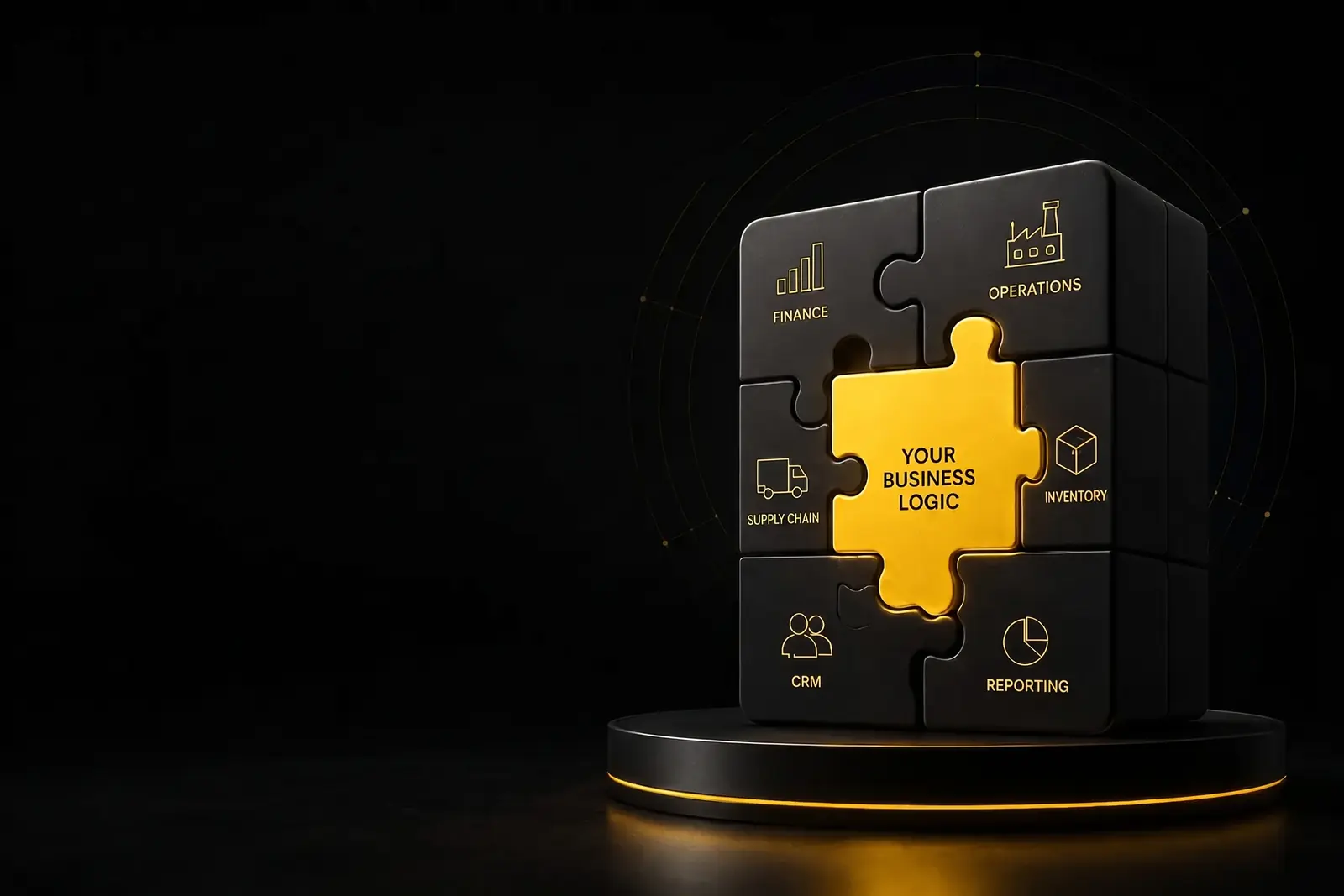
Operational playbooks stay ready. Reference architectures for common machine learning use cases get reused. Proven ways to connect the systems you already run stay documented. Shared data governance and data management rules do not get reinvented each time.
Once that cost drop is clear, the remaining question is whether the partner has already delivered that model under real constraints.
Evaluating Proof
Reusable playbooks only matter if the delivery partner has already shipped owned systems under the same ownership and handoff rules. unosquare has completed more than 2,500 projects across 16 years of engineering delivery, with a client NPS in the top 1% of B2B services.
Case studies run from prototype to production for AI services that leave your team in control. Sample Statements of Work show acceptance checks and a written process for pricing scope changes. Knowledge-transfer checklists name playbooks, overlap days, and operational guides.
Where regulated work applies, deliveries are built for SOC 2 Type 2{5} and HIPAA-ready environments across financial services, healthcare, and other regulated industries.
That track record is useful only when the fit conditions match your mandate. The checklist below is the filter.
Is This Fixed-Fee Approach Right for Your Organization?
If the proof points above match how you need to buy, the next filter is fit. The model fits when you already have four things in place. Executive sponsorship is confirmed. AI outcomes are measurable. An internal ops owner will run the system after handoff. The timeline is real: a board deadline, a competitive window, or a production mandate this quarter.
In short, you are ready for AI transformation when the next build is a business deadline, not a tour of emerging technologies.
Start with Discovery if any of these are still open. You may still need a clear definition of “done,” an executive owner for scope decisions, or internal capacity to ship on the required timeline.
A week-one prototype, with no commitment, either confirms readiness or shows what to clarify first.
The Commitment Comes After You’ve Seen What You’re Getting
If the fit checklist is mostly yes, the next step is a week-one prototype against your first use case and your real data. You decide at the end of that week whether your team can run it and own it. Nothing is agreed until you say so.
Start with the week-one prototype
Frequently Asked Questions
Once the week-one prototype is on the table, the remaining questions are usually practical. How does handoff work? How do stalled pilots reach production? How does the Statement of Work keep acceptance objective?
What does the handoff look like when the build is complete?
At Week 12, the system is live in your production environment. Your team walks through each part during overlap days.
Ownership of the code, documentation, operational guides, and automated checks transfers to you. A warranty period begins on the day of handoff.
How do we move from an AI pilot to production software?
Production needs four things. Ownership must be defined{6}. Operational documentation must exist. Data governance rules must be clear. The system must handle real day-to-day volume.
Take what the pilot proved and turn it into a scoped Statement of Work with explicit acceptance checks. Discovery in Week 1 can assess the pilot and define what a production-ready version requires.
How do we align an AI mandate from the board with a realistic delivery plan?
Turn the mandate into a specific, measurable deliverable with a defined production date, then let Discovery validate timeline and budget. You leave that week with either a signed Statement of Work with locked scope and fee, or a clear view of what to refine before a build can begin.
What goes into the Statement of Work so acceptance stays objective?
unosquare writes named deliverables tied to pass/fail acceptance checks. Milestone payments link to those checks, not calendar dates alone.
A documented change process covers priority shifts. That structure goes into the engagement before development begins.
We’ve been burned by an outsourcing partner before. How is this different?
unosquare locks scope, price, and what “done” means before development begins, with milestone payments tied to clear acceptance checks. Code is client-owned from day one, and if a milestone is not met, payment does not release.
If your AI Center of Excellence still advises and gates instead of shipping owned systems repeatedly, unosquare‘s outcome-based delivery puts GRASP in writing on each build so the next system can ship the same way. Request a free prototype to validate the first use case against your real data and systems before committing to the full build.
References
- NIST. (n.d.). AI RMF core. NIST Artificial Intelligence Resource Center.
https://airc.nist.gov/airmf-resources/airmf/5-sec-core/ - OECD. (2024). Recommendation of the Council on Artificial Intelligence. OECD Legal Instruments.
https://legalinstruments.oecd.org/en/instruments/oecd-legal-0449 - Deloitte. (n.d.). Leveling up the AI center of excellence. Deloitte.
https://www.deloitte.com/us/en/what-we-do/capabilities/applied-artificial-intelligence/articles/ai-center-of-excellence.html - MIT Sloan Management Review. (n.d.). Create generative AI value at scale. MIT Sloan Management Review.
https://sloanreview.mit.edu/article/create-generative-ai-value-at-scale/ - unosquare. (n.d.). Custom software development services. unosquare.
https://www.unosquare.com/custom-software-development-services/ - CIO. (n.d.). Building an AI CoE: Why you need one and how to make it work. CIO.
https://www.cio.com/article/4170899/building-an-ai-coe-why-you-need-one-and-how-to-make-it-work.html
Our Editorial Standards
unosquare is committed to providing accurate, well-researched B2B software delivery information. Our editorial team reviews all content for accuracy and relies on reputable sources including industry analysts, technology standards bodies, academic institutions, peer-reviewed research, and established enterprise software providers. All references are verified for accessibility and relevance at the time of publication.
We strive for accuracy in everything we publish, but we recognize that mistakes can occur and information can become outdated as delivery models, pricing benchmarks, and technology standards evolve. If you notice an error or outdated information, please contact us so we can review and update our content.
Important Disclaimer
The information provided on this website is for general informational and educational purposes only. It is not intended as, and should not be interpreted as, professional legal, financial, or technical implementation advice. Always consult with qualified technology advisors, legal counsel, or appropriate professionals before making decisions about software investments, vendor selection, or delivery models. unosquare does not assume liability for actions taken based on the information presented on this site.

Oscar Rank
Head of Marketing
Oscar Rank is the Head of Marketing at unosquare. He arrived there after a 15-plus year career spanning financial services, retail and technology. His path ran through product management, strategy, data and CRM roles before he made the jump into full-funnel marketing and GTM. He holds a degree in industrial engineering from the University of Toronto, with a specialization in human factors. That systems-first, human-centered mindset shows up in how he runs marketing: build the process, then let the data settle the argument. He writes about how software and AI are changing what’s possible for a business, and how that shifts the trade-offs leaders have to make.