
hi-tech
Product Development and IoT for Remote Camera Management
7 years (and counting) powering Strike Force’s connected camera platform.
Highlights / Intro
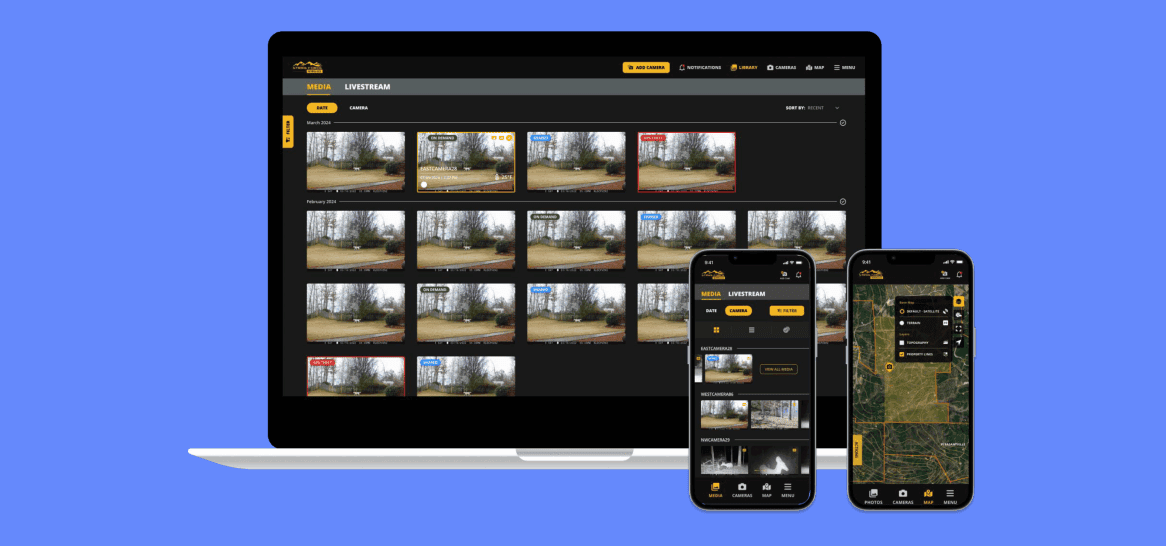
Strike Force provides hunters and security users with the ability to operate Browning Trail cameras remotely. To scale this vision, they needed a full product engineering team without adding headcount in-house. unosquare became their long-term nearshore partner, building and evolving both desktop and mobile applications while supporting IoT integrations for connected camera management.
Challenge
Strike Force needed to:
Modernize their camera management app to improve user experience.
Scale support from a handful of devices to multiple hardware types.
Coordinate IoT and data integrations with third-party manufacturers and telecom providers.
Maintain and expand the platform without overextending internal resources.
Solution
unosquare deployed a blended nearshore team covering front end, back end, QA, cloud, database engineering, and project management. Together, they:
Designed and delivered native desktop and mobile applications with React Native and Rails.
Integrated directly with IoT hardware providers overseas to coordinate device connectivity.
Embedded telecom data integrations with AT&T and Verizon to strengthen real-time camera operations.
Established a long-term roadmap for platform growth, scaling from 2 to 12+ camera types.
The Strike Force app saw ratings climb from 2.2 to 4.6 stars as the platform matured, expanding its user base and scaling from just two camera types to more than a dozen. With a dedicated nearshore team embedded in the day-to-day, Unosquare lowered operational overhead while shipping steady improvements.
We integrated IoT and telecom data flows to boost reliability and create a seamless cross-device experience.
Behind the delivery, our Centers of Excellence elevated performance at every level:
Solution Architecture COE → Defined and evolved the long-term product roadmap, aligning hardware integrations, telecom connectivity, and platform scalability to support Strike Force’s expansion from two to over twelve camera types.
Software Engineering COE → Designed and delivered native desktop and mobile applications using Ruby on Rails and React Native, ensuring cross-device consistency and scalable feature development across hardware generations.
Cloud & Infrastructure COE → Streamlined deployments and secured IoT connectivity across distributed devices, enabling reliable real-time communication between cameras, cloud services, and mobile applications.
Data COE → Structured and routed telemetry data from cameras and telecom providers into actionable insights on device health, connectivity performance, and user behavior.
Quality Engineering COE → Automated multi-device and multi-network testing to strengthen release confidence, ensuring consistent performance across evolving hardware types and carrier integrations.
Agile COE→ Enabled predictable delivery through structured sprint execution, cross-functional collaboration, and embedded product leadership supporting a long-term growth roadmap.
The team itself was compact and cross-functional: six engineers spanning front end, back end, database engineering, cloud & DevOps, and quality engineering, guided by a scrum master and supported by project management, so decisions stayed fast and delivery stayed predictable.
On the tech side, we built with Ruby on Rails across front and back end, React Native for the mobile apps, and tight hardware/IoT integrations with the camera ecosystem and carriers.
When hardware and IoT meet scale, we engineer the software to power it.
Next Starts Here